
Don’t Scotch That Thought!

Welcome back to Thebeerchaser. If you are seeing this post through an e-mail, please visit the blog by clicking on the title at the top to see all of the photos and so the narrative is not clipped or shortened. (External photo attribution at the end of the post. #1)

Based on the name of this blog, one would think that it is primarily about beer and breweries, however, I regularly venture into other territory as you will see below.

For example, in February, my post was a farewell tribute to lawyer and civic leader, Steve Griffith, who died at 80 while ascending 20,540 Chimborazo, the highest peak in Ecuador.

“It’s a new world, but it’s the same Constitution” (2)

US Supreme Court Chief Justice, John Roberts, made this terse retort to Solicitor General John Sauer, in the April 1st birthright citizenship case. That statement, which will be quoted for years, would have had great meaning to Steve and Jim Westwood – both former partners at the Portland law firm Stoel Rives.

That’s because both spent many years as unpaid dedicated coaches teaching high school students the history and principles of the Constitution for the national We the People Competition which culminates with simulated congressional hearings where students testify before a panel of judges acting as members of Congress in the National Finals each year in Washington DC. (#3 – #4)

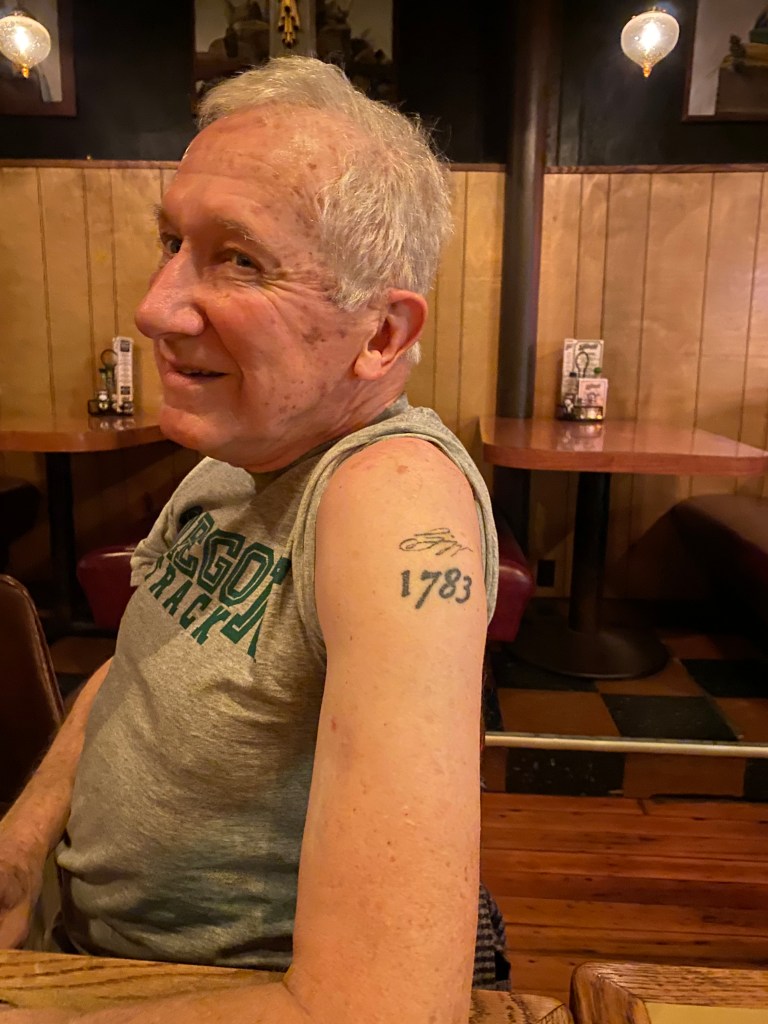
Westwood’s Grant High School Team won the National Championship in 2013 and 2015. The 1783 tattoo you see below was a result of the promise he made to his team if they won in DC. It was followed by two more – one in 2018 and even though he retired from full-time coaching in 2019, he got a third inking in 2024. The legacy continues as Grant High will compete in the National Finals this month although Jim will be cheering from a distance.

Griffith’s teams from cross-town rival Lincoln High School have a similar penchant for the Nationals.

“Under his guidance, Lincoln High’s Constitution team achieved significant success. The program has won the national ‘We the People: The Citizen and the Constitution’ competition multiple times, including three national titles in the past decade.”

In these times where there appears to be a disdain for the Rule-of-Law by political leaders, I salute the efforts of these two attorneys in trying to preserve it during their careers.

Celebrating Rabbie Burns

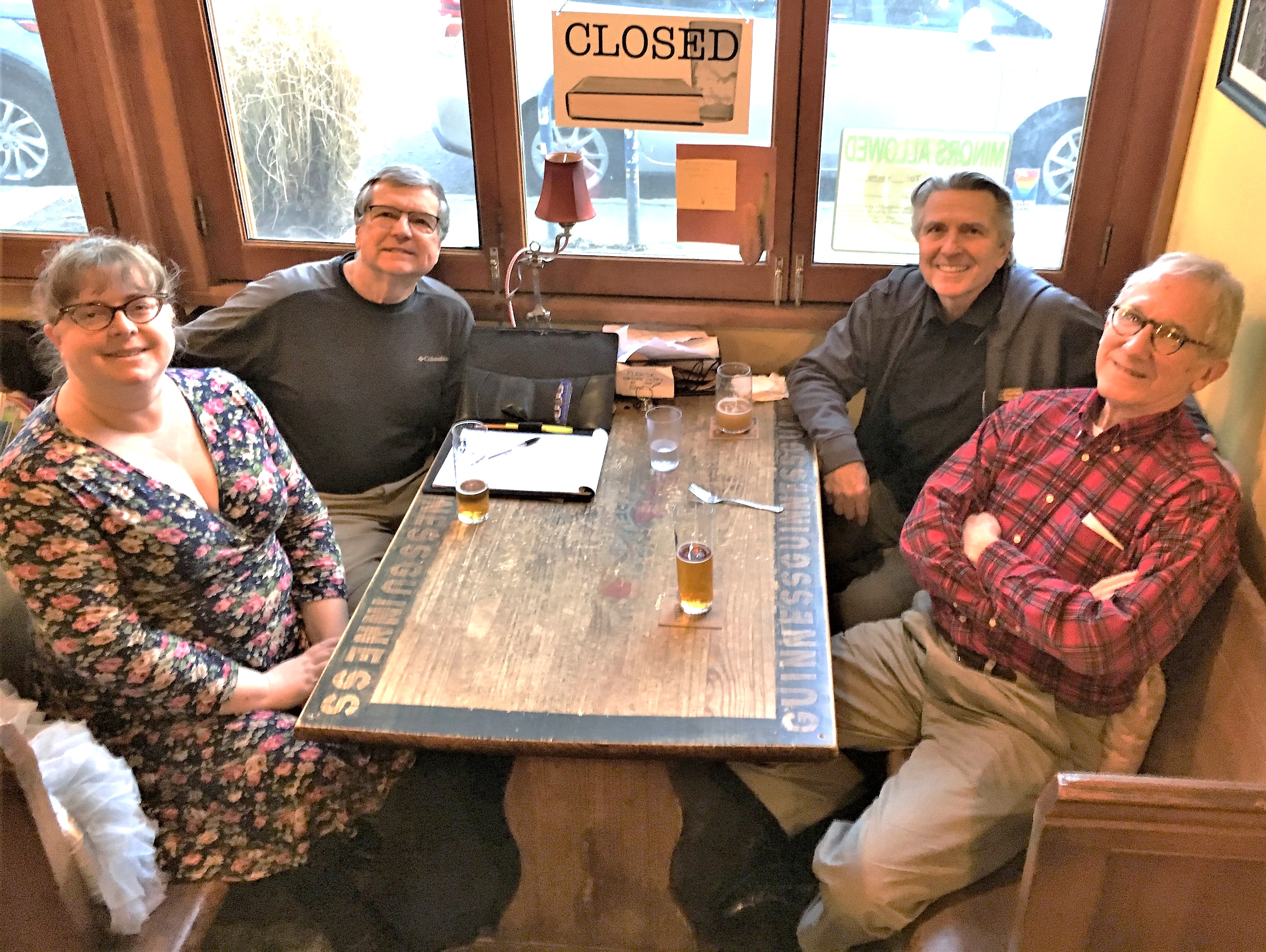
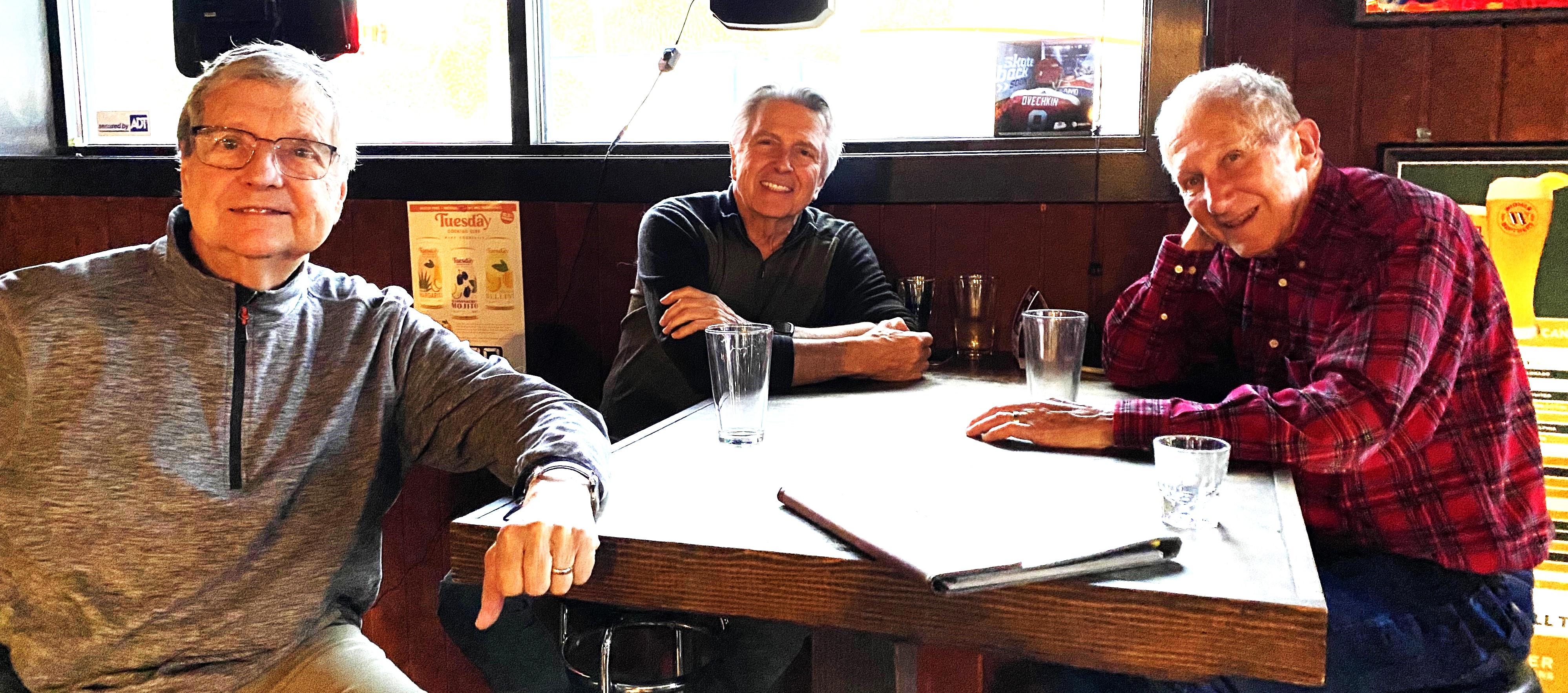
The aforementioned Jim Westwood and I go back many years – both Oregon City High School grads as well as professional and civic relationships. Even though our politics diverge, he has been my most frequent Beerchasing companion during the last fifteen years as you can see from just a few of these prior exploits.

Robert Burns’ Night

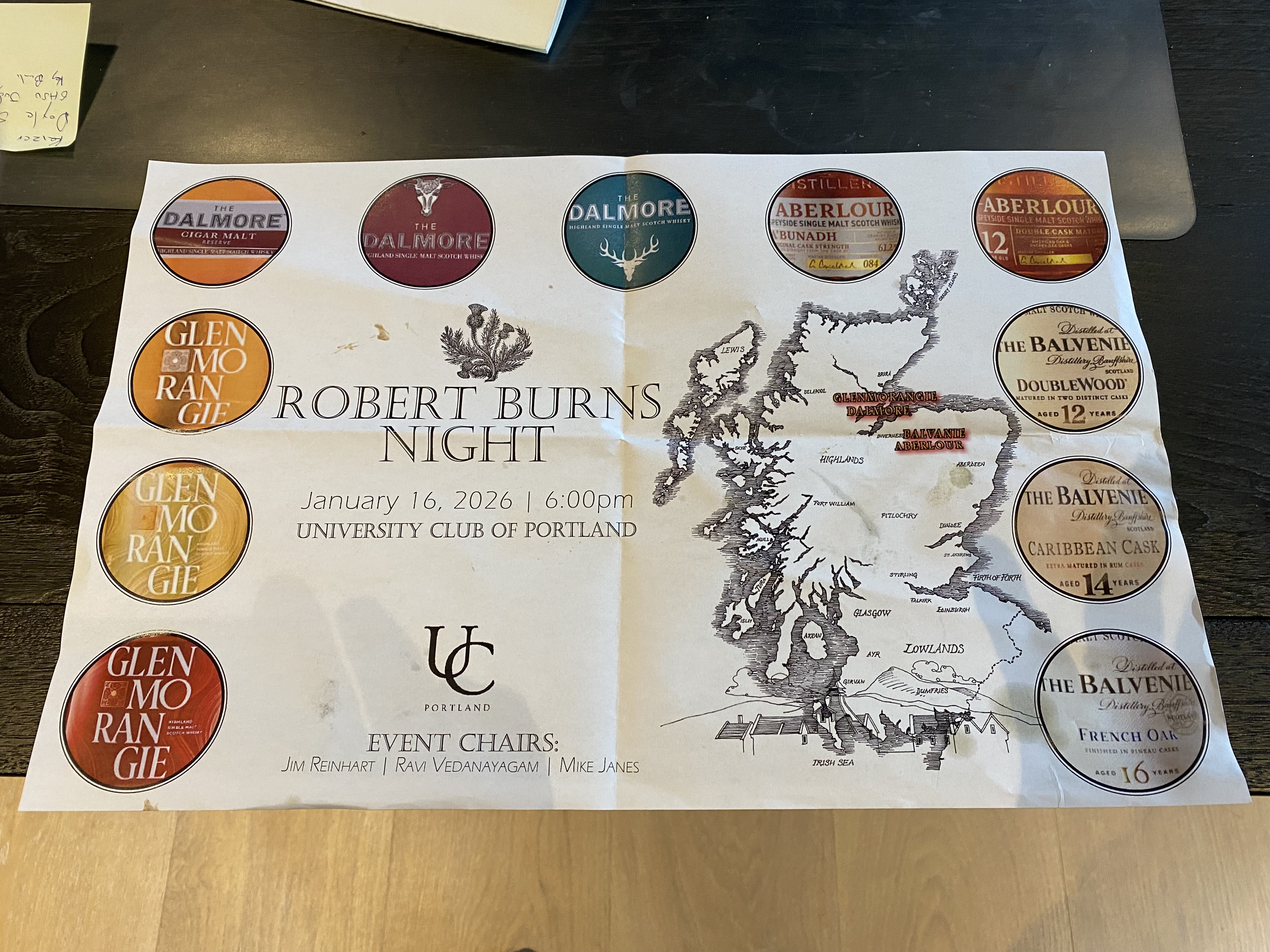
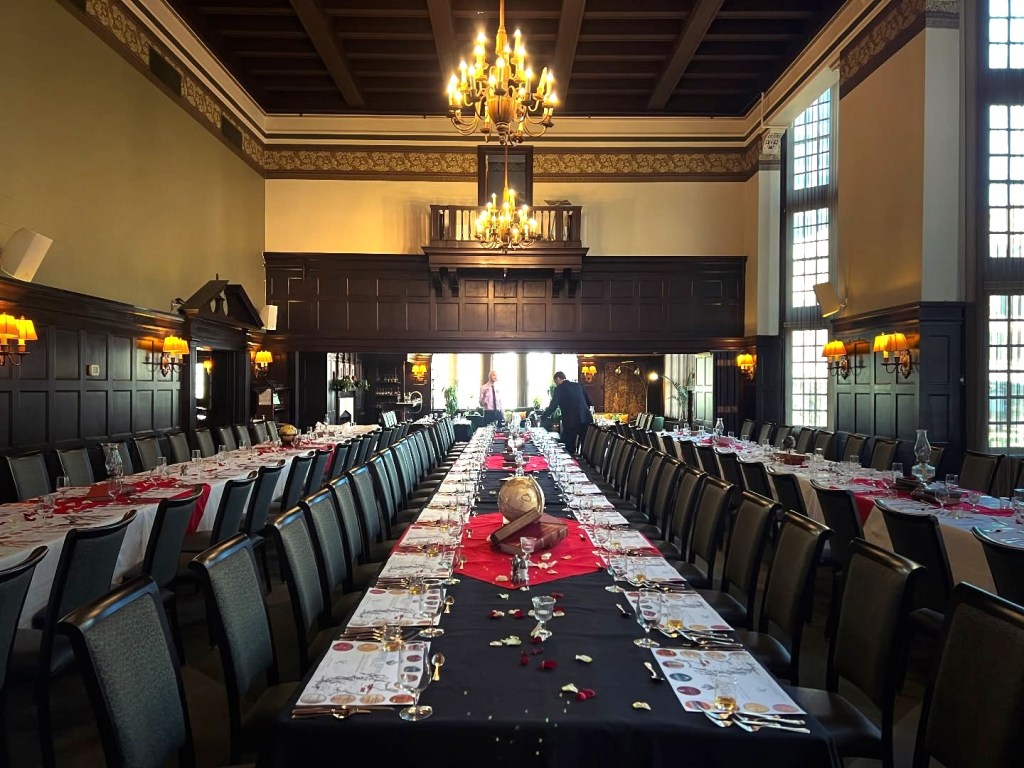
The esteemed counselor and I also have an affinity for whiskey and have occasionally downed a shot of Scotch while Beerchasing. (It’s a generic term…) So, I was honored when Jim extended an invitation in January to attend the Robert Burns Supper at the University Club – one of the premier venues for dinners and events in Portland. (#5)
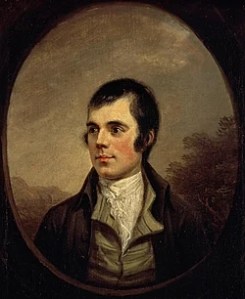
“Robert Burns (25 January 1759 – 21 July 1796), also known familiarly as Rabbie Burns, was a Scottish poet and lyricist. He is widely regarded as the national poet of Scotland and is celebrated worldwide…as a pioneer of the Romantic movement, and after his death he became a great source of inspiration to the founders of both liberalism and socialism.

Burns Night, in effect a second national day, is celebrated on Burns’s birthday, 25 January with Burns suppers around the world…” (Robert Burns – Wikipedia).

A Wee Bit of Trepidation…

Before the dinner, I did a little research to make sure I could wax eloquently about the liquid which was a focus of the evening. I found out through AI that: (#6)

Whiskey is a broad category of distilled spirits made from fermented grains such as barley, corn, rye or wheat and aged in wooden barrels. Scotch, on the other hand, is a type of whiskey produced exclusively in Scotland, following strict rules regarding ingredients, distillation, and aging…Traditional Scotch is made primarily from malted barley, though some variations use malted wheat or rye. 

Scotch must be aged for at least three years in oak casks, sometimes previously used for wine or other spirits. Whiskey is typically aged in charred white oak barrels, with aging requirements varying by type and region…To be labeled Scotch, a spirit must be distilled and matured in Scotland, contain  only water and caramel coloring as additives, and be bottled at a minimum of 40% ABV.”

After I eagerly accepted the invitation, however, I reflected on my last major encounter with Scotch since at the dinner, we would be sampling eleven different types of this whiskey. I retired in 2011 after working my last twenty-five years at the Schwabe firm – a NW regional law firm based in Portland.

The last twelve I was the Chief Operating Officer when the firm had grown to about 150 lawyers in five offices. I loved both the firm and my job, although the demands of the job were daunting. When I retired, the firm was extremely generous in sending me off to a “life of leisure” and what would soon include my new hobby — Beerchasing.
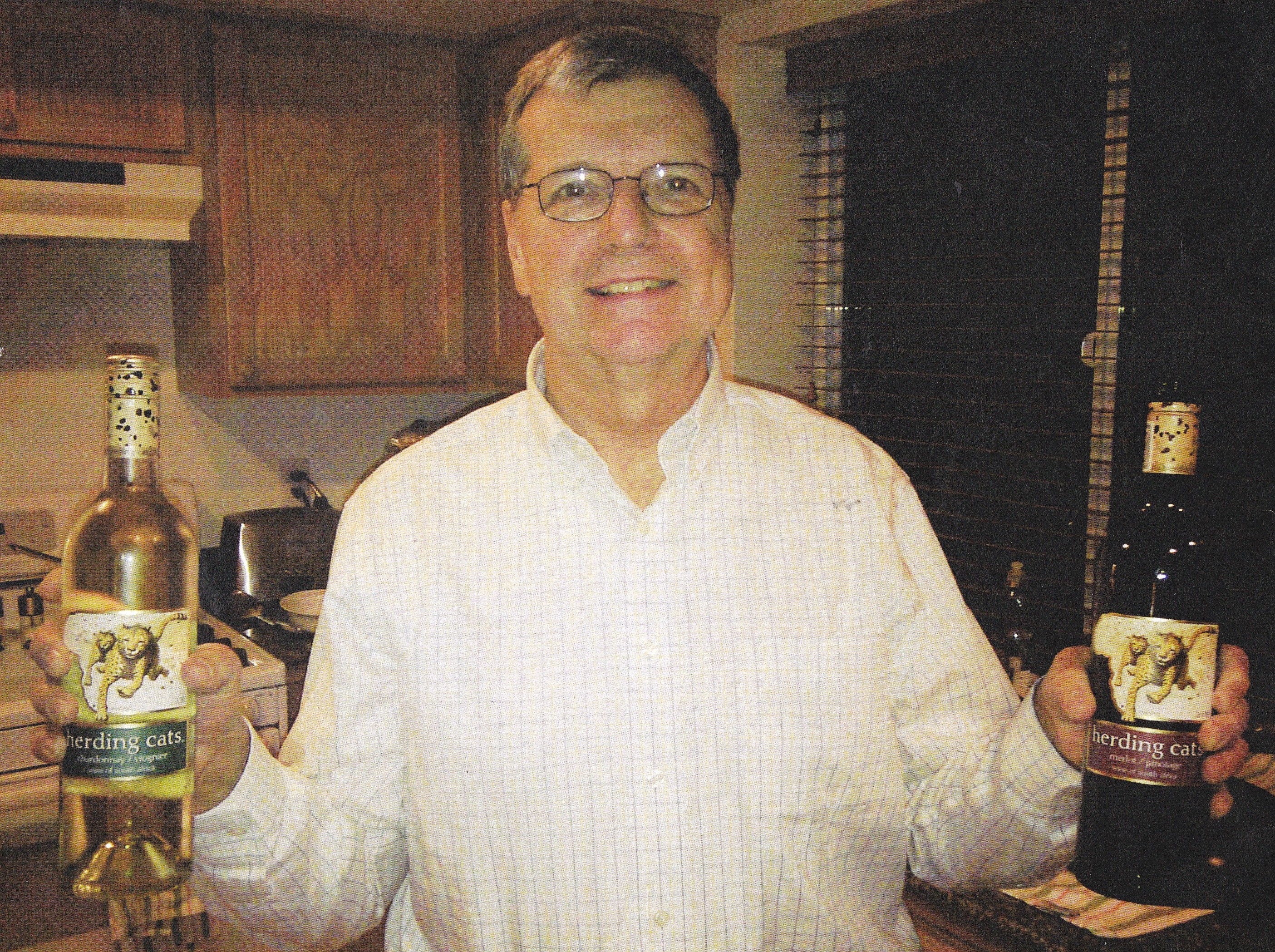
Two of the gifts they presented at my retirement party were bottles of Herding Cats wine and a wonderful bottle of 15-year Balvenie Scotch. (The wine label was supposed to be a reference to my job description at the firm and I readily accepted the fact that the 50-year Balvenie – now listed at $49,999 – would be too extravagant even fifteen years ago.)

Well, a month later, my wonderful brother-in-law, Dave Booher, and I embarked on a two-day camping trip (we didn’t even have to do it on a weekend…) to the San Juan Islands. Dave is a wonderful cook and grilled steaks while I sat back aside our Strait of Juan de Fuca campsite and initiated my bottle of Balvenie while smoking a cheap cigar.

Fully realizing that I didn’t have to get back to work after this trip ended, I still tried to pack as much into that wonderful evening as I could. To make a long story short, I didn’t touch Scotch again for years afterwards.

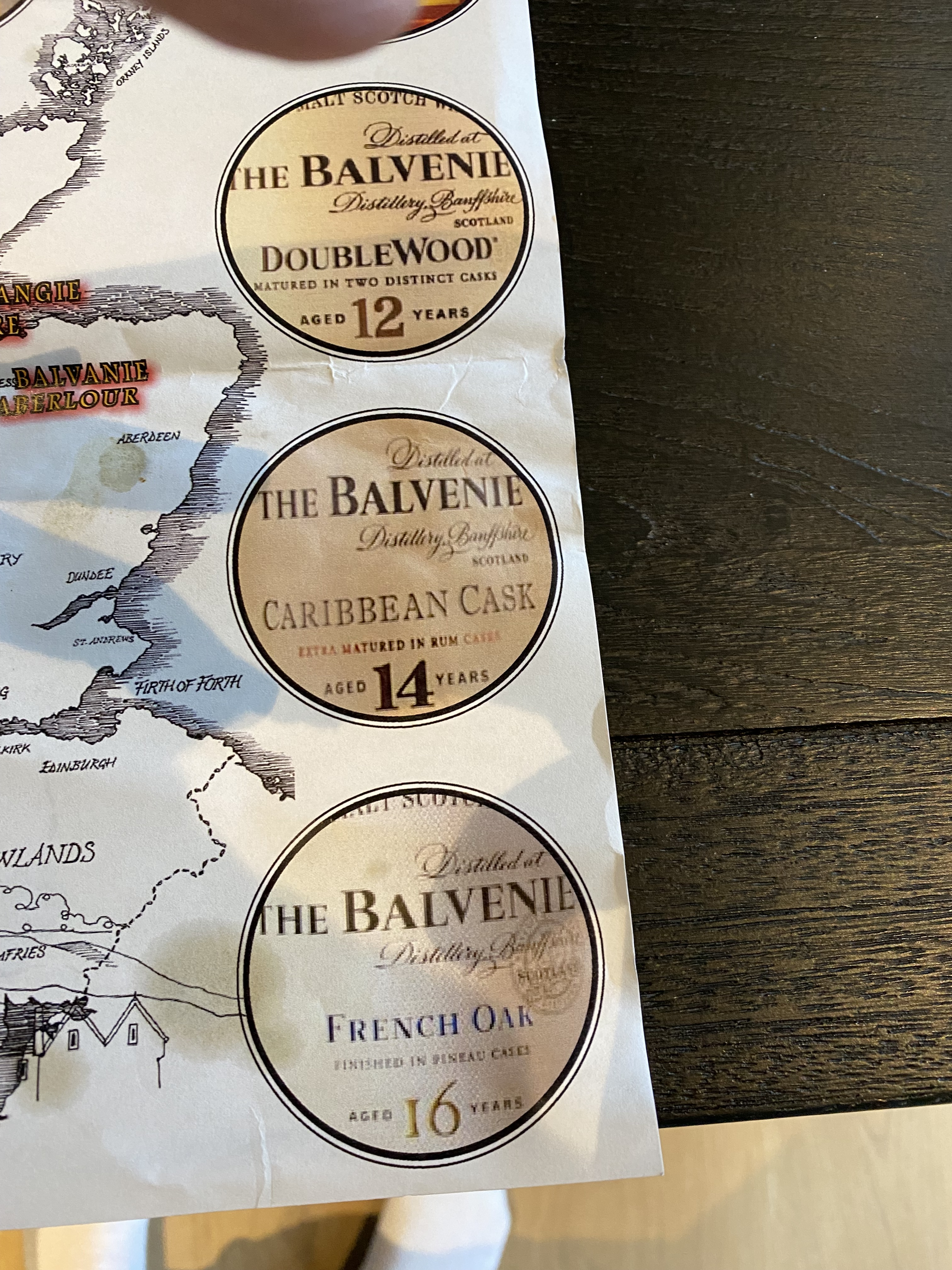
The fact that I learned my lesson in 2011 and the eleven tastes of Scotch (which would include three Balvenie vintages) at the Robert Burns dinner would just be sample sips and done over a three-hour dinner/ceremony, mitigated my concern about another major excursion with Scotch

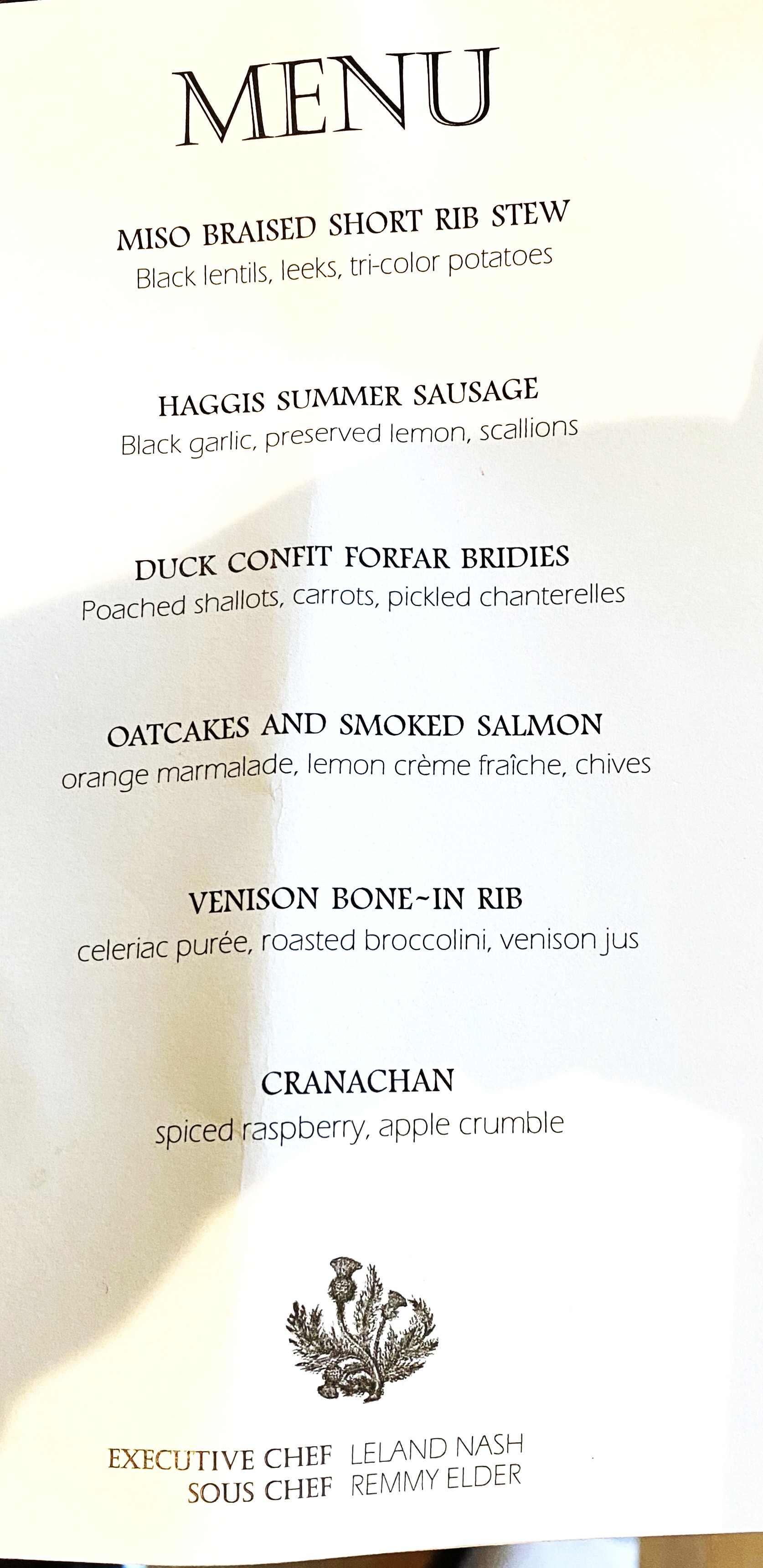
The dinner was wonderful – the company, the Scotch, the food and the ambiance. Rabbie Burns would have been proud. We followed the standard format of this event celebrated all over the world: (#7)
Burns Night (dating back to 1802) in effect a second national day, is celebrated on Burns’s birthday, 25 January, with Burns suppers around the world, and is more widely observed in Scotland than the official national day, St. Andrew’s Day

The format of Burns suppers has changed little since. The basic format starts with a general welcome and announcements, followed with the Selkirk Grace. After the grace comes the piping and cutting of the haggis, when Burns’s famous ‘Address to a Haggis’ is read and the haggis is cut open.

The event usually allows for people to start eating just after the haggis is presented. At the end of the meal, a series of toasts, often including a ‘Toast to the Lassies’, and replies are made… The event usually concludes with the singing of ‘Auld Lang Syne'”.

Even after listening to the news that day, I left the UC with an air of optimism embracing the assertion of David Daiches Scottish historian and literary critic:

The proper drinking of Scotch whisky is more than indulgence: it is a toast to civilization, a tribute to the continuity of culture, a manifesto of man’s determination to use the resources of nature to refresh mind and body and enjoy to the full the senses with which he has been endowed.”

It was a night to be remembered and Jim’s generosity will be toasted with a good IPA at our next Beerchasing although I’m ready for another robust Balvenie experience. As we departed, I reminded Jim of one apt Burns’ quote:

Here’s to us. Who’s like us? Damn few, and they’re all dead.

Scotch and Moda….

In my recent Beerchaser post, I restated my annual gripe about Moda Health and the Portland Trailblazers purported “generous” contributions to build community playgrounds in Oregon – a combined $20 for every assist in a Blazer game which has averaged slightly less than $40,000 per season – the same amount since it was initiated in 2013 notwithstanding inflation.

The irony is that the Trailblazers were groveling at the 2026 Oregon Legislature for a combined contribution of about $870 million from the State, Multnomah County and the City of Portland to renovate Moda Center for the next twenty years.

Well, they were successful and the funds will be forthcoming from the citizens of Oregon. I guess this begs the question: “Will they raise the $20 next year?” Want to make a bet!

Cheers

External Photo Attribution

#1. Wikimedia Commons (File:Whiskyhogmanay2010.jpg – Wikimedia Commons) Licensed under the Creative Commons Attribution-Share Alike 3.0 Unported license. Author: Guinnog – 31 December 2010.

#2. Public Domain – Wikimedia Commons (Official roberts CJ – John Roberts – Wikipedia ) United States Department of Justice. This work is in the public domain in the United States because it is a work prepared by an officer or employee of the United States Federal Government as part of that person’s official duties under the terms of Title 17, Chapter 1, Section 105 of the US Code. Author: Steve Petteway – 2005.

#3. Fordham Institute (https://fordhaminstitute.org/about/fordham-staff/stephen-griffith).

#4. Multnomah Bar Association.

# 5. University Club Facebook Page (https://www.facebook.com/photo/?fbid=1491130319685543&set=pcb.1491130373018871).

#6.  Wikimedia Commons (File:Auchentoshan04.jpg – Wikimedia Commons) Licensed under the Creative Commons Attribution-Share Alike 3.0 Unported license. Author: User:Nicor – 16 February 2006.

#7. Public Domain – Wikimedia Commons (PG 1063Burns Naysmith – Robert Burns – Wikipedia) Alexander Nasmyth (1758-1840).  National Gallery of Art – Scotland – 1787. The author died in 1840, so this work is in the public domain in its country of origin and other countries and areas where the copyright term is the author’s life plus 100 years or fewer. Painter: Alex
Analysis Paralysis and Efforts to “Be Better”

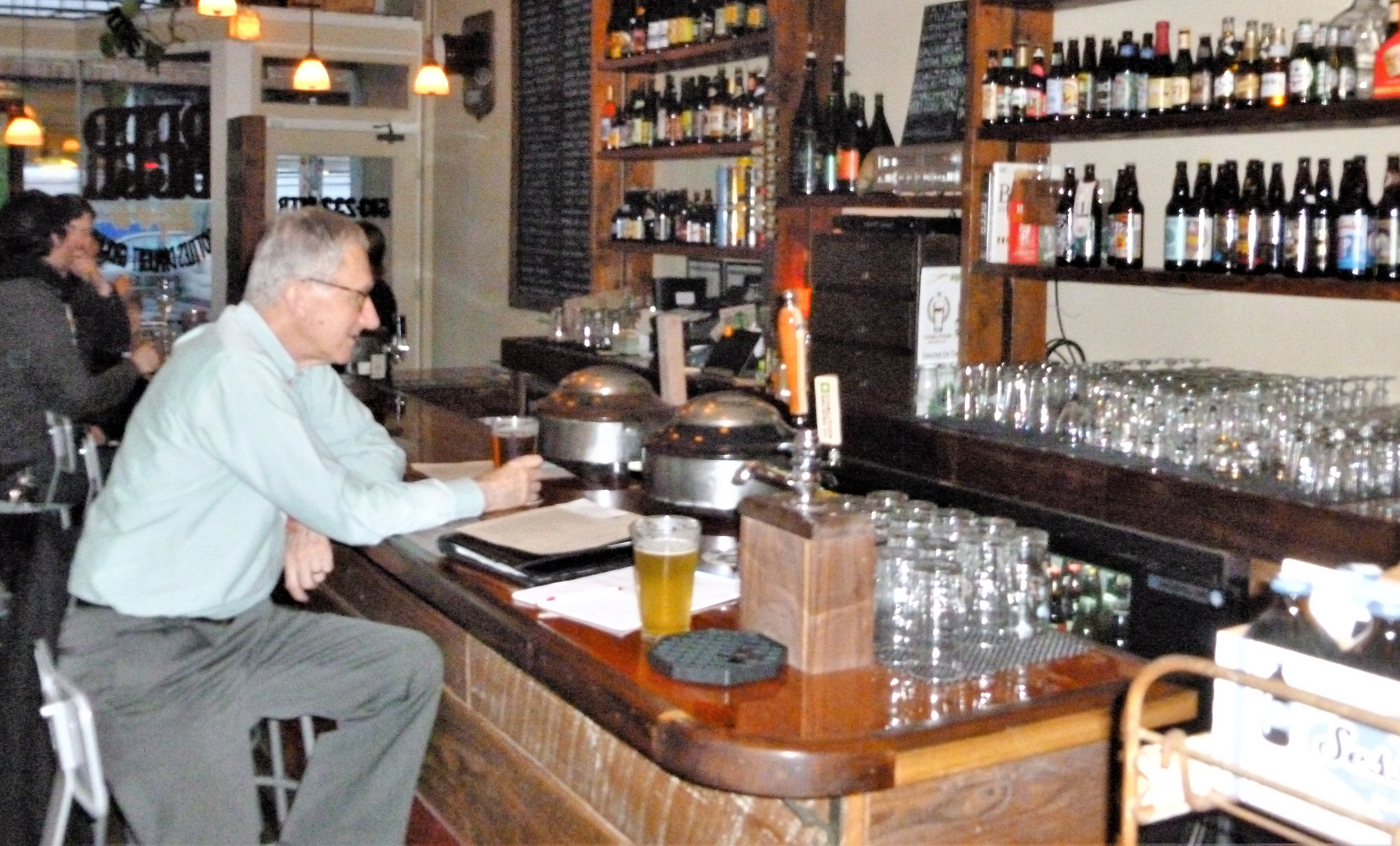
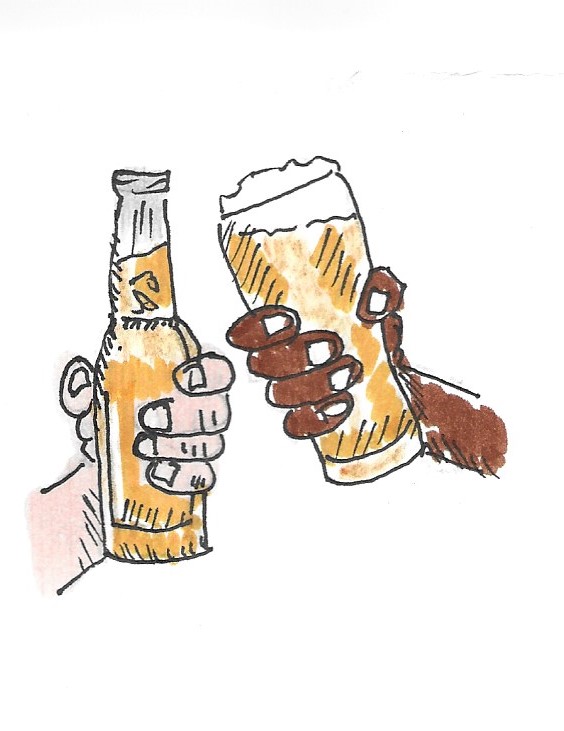
Well Beerchasers, you will have to excuse the lack of news about bars and breweries in this post.   And the image above (thanks to my sister-in-law, Pam Williams) and the pre-pandemic photo below from the gone but not forgotten Club 21 in Portland are the only pictures related to beer reminding us of what we are missing,. 

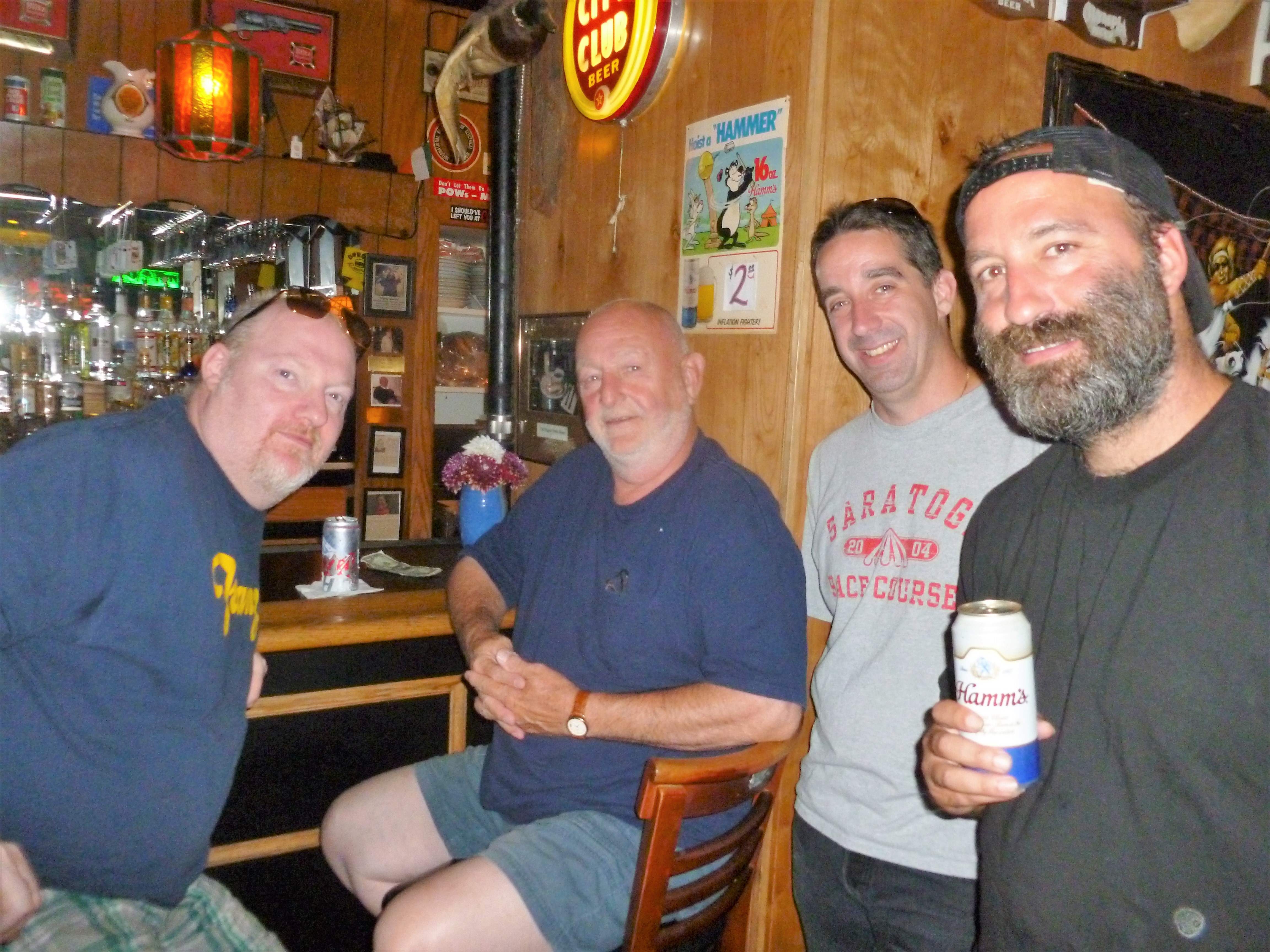
Chatting with a fascinating group of Club 21 regulars in 2014

My rationalization is that I still cannot really follow my protocol of going inside to new establishments and interviewing bartenders and regulars.   In addition, this platform is one where I can fret about annoyances and pet peeves and get them off my chest – even if I’m the only one who reads them…..So be forewarned, however, some of you may have the same frustration with the issue below.

The pandemic and events leading up to it, have made me a lot more conscious about statistics.   And it’s not that I was oblivious to numbers and trends previously.   In my twenty-five years in management at the Schwabe Williamson & Wyatt law firm in Portland – first as Business Manager and then for the last twelve as  COO – analyzing and interpreting data and trends on collections, billings, hours worked and expenses were an ongoing priority.

Originator of the lamppost analogy…

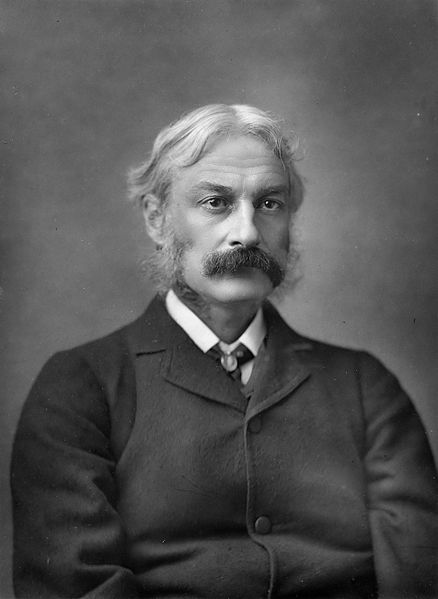
In fact, Dave Bartz, our Co-managing Partner and now Chair – Emeritus at the firm, loved to quote Scottish poet and literary critic Andrew Lang who asserted:  “Most people use statistics like a drunk man uses a lamppost; more for support than illumination” 

And when we were trying to motivate lawyers to pay more attention to the business of law so both attorneys and the staff could get paid, we didn’t hesitate to use that maxim – especially at year-end!

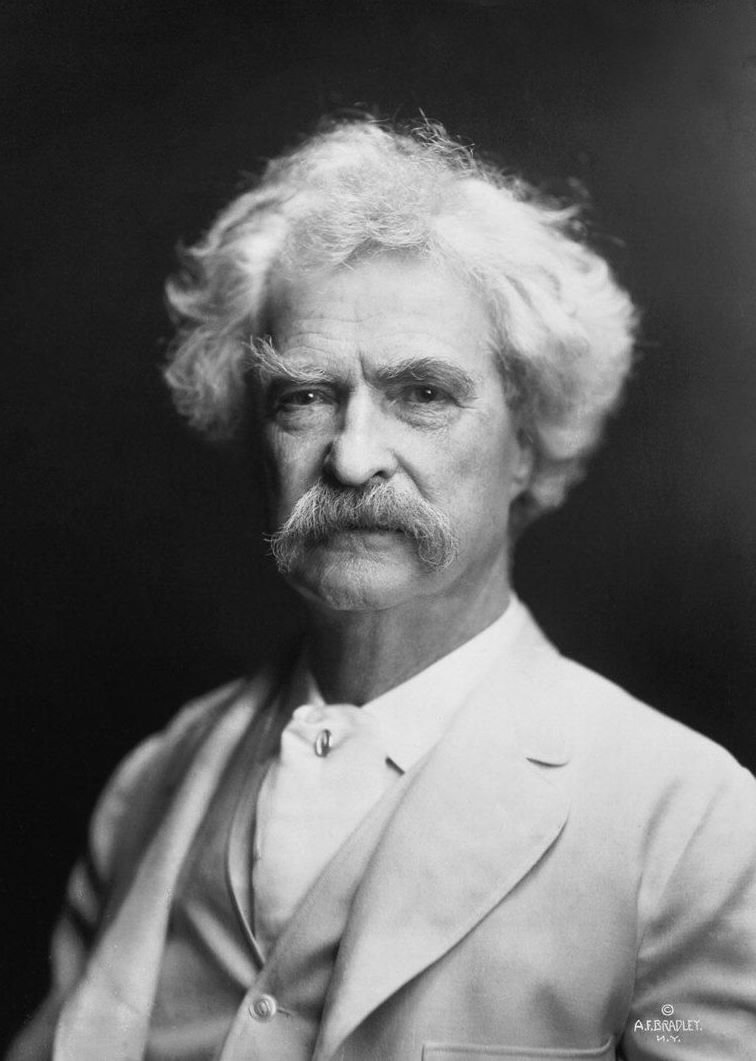
Of course, lawyers were aware of efforts to frame the key statistics to enhance our position and one of them would inevitably respond with Mark Twain’s assertion:  “Facts are stubborn things, but statistics are pliable.”

“Don’t bullshit me with figures…..”

Now – to digress – and  speaking of drawing a conclusion after analyzing, let’s use the example from Wikipedia when citing the source of the photo of Lang above.

The disclaimer states, “The copyright situation of this work is theoretically uncertain, because in the country of origin, copyright lasts 70 years after the death of the author, and the date of the author’s death is unknown.”

Then in an incredibly dry and understated manner it adds:

However, the date of creation of this work was over 120 years ago, and it is thus a reasonable assumption that the copyright has expired.”   Since it also stated that Lang died in 1914, I felt reasonably reassured that I could use this photo with the public domain attribution.

In 1980, I also had the experience of taking two terms of Data Analysis in graduate school with my new wife – her first two courses in the MPA Program at Portland State University – and my last two.

There was no on-line personal computer capability then and it was a real strain on our new marriage.  We’d negotiate on who got to go down and stand in line at Shattuck Hall on Saturday morning to run the punch-cards to get the report we had to analyze and who got to clean the bathrooms at our house. (The loser had to drive to Portland State!)

But over those months, we grudgingly learned Regression Analysis and stat concepts such as Hypothesis Testing and Statistical Significance, and Central Tendency.

Shattuck Hall – It looks so welcoming now, but in 1980??

The last year makes us realize more than ever before that data can be manipulated, interpreted differently or even blatantly distorted to promote a position.   It seems that ethical and rational conclusions have been discarded at will – and it’s bipartisan practice.

Whether it was Donald Trump’s infamous assertion on February 26, 2020 about COVID 19:  “You have 15 people, and the 15 within a couple of days is going to be down to close to zero,”

Signing the Congressional Funding Bill for Coronavirus Response on March 2020 – it didn’t work……..

Andrew Cuomo

But the Dems reinforce the practice whether it be New York Governor, Andrew Cuomo’s manipulation of nursing home deaths due to COVID

or

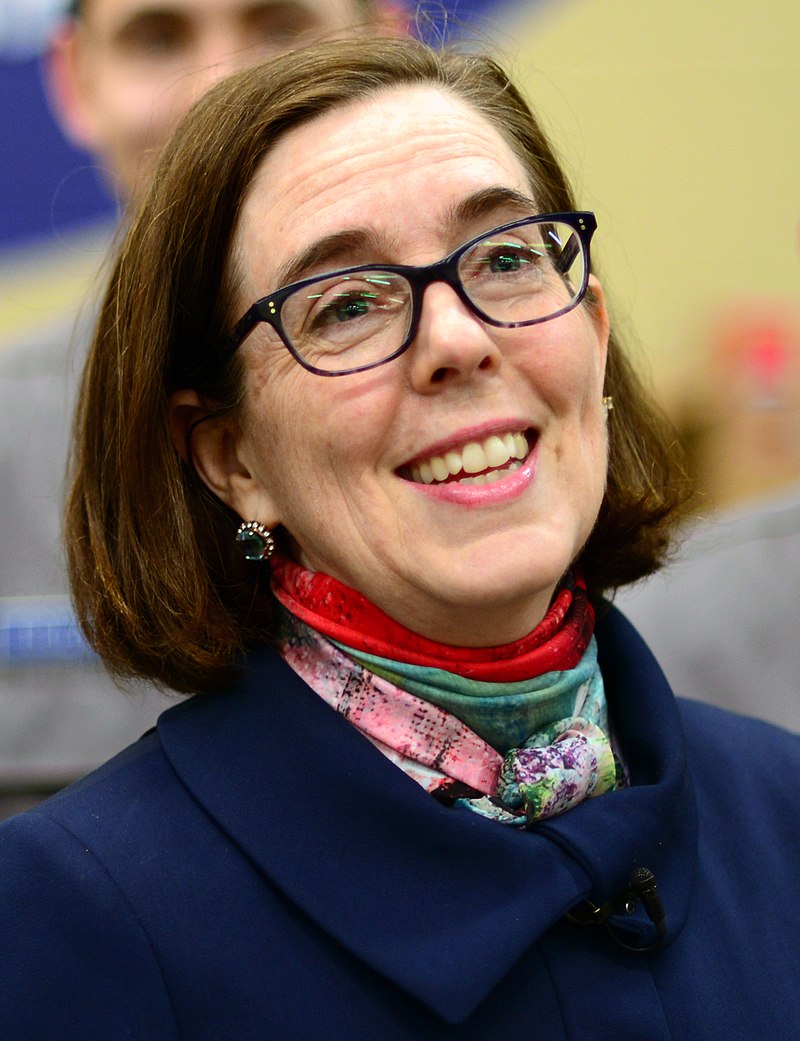
Kate Brown

Oregon’s own Kate Brown’s (D) administration’s alleged “massage” of COVID statistics to reinforce the rationale for Oregon’s policy.  The Oregon Health Authority – up until a KGW television reporter pointed out the flaw – also skewed the data on the number of Oregon COVID cases:

“OHA counted only ‘new’ people who got tested. If someone got a test in June and was negative, then returned for another test in July and was negative, that second test would not be counted as part of that July day’s total of tests given…..Not counting all the return people getting tested increased the positivity rate because it created a smaller denominator in the equation.”

While this approach may have been an honest mistake in uncharted territory, some would assert that it was a deliberate and nefarious attempt to increase case data to justify Oregon’s stricter lockdown policies.  And it was statistically significant……

The State has also exhibited it’s abhorrence to data transparency until objections by the media and constituents forced a turnaround on work-place outbreaks in May, 2020.

So what can each of us do in these times where mutual trust is as scarce as a glass of fine Pinot in a dive bar.  As rare as an NFL lineman who has never undergone concussion protocol or as infrequent as….. – sorry, I got carried away.

Statistics – not very attractive as a course offering

Broadcast and print news media now often have a political slant and newspapers struggle to provide investigative reporting staff.

Statistical Analysis tends to be a course  avoided in both high school and college – especially when one can, as an example, get three hours of credit at Michigan State University for “Surviving the Coming Zombie Apocalypse—Disasters, Catastrophes, and Human Behavior.”  Go Figure – so to speak…

And, of course, social media (like this blog….) is not exactly the most appropriate repository of veracity.

Some tips on how to mitigate this issue.

Read your paper – be informed and support it!

  • Support your local newspaper to help promote independent journalism in the future.
  • Employ some journalistic standards on your own e.g. checking multiple sources to verify what is stated as fact in articles – especially those on social media.

A timely (2/28) letter from Editor, Therese Bottomly, in The Oregonian entitled  “Yes, you should read us but please read lots of other sources, too,”  eloquently affirms my advice:

“Pew’s new analysis is a reminder that we should all broaden our media diet…..I encourage you to read widely. It’s worthwhile for those on the left and on the right to consume news from a broad spectrum….And it is wise to keep in mind the differences between fact-based news and straight-up opinion writing.” 

  • Challenge – through letters-to-the-editor and ongoing dialogue – baseless assertions made by those who are not well informed or conversely, those who are well informed and deliberately offer falsehoods.

Yes Virginia, there are THREE branches in the US Government and the Judicial Branch is one

  • Promote civic education in your local high school.  These courses are increasingly absent from curricula.   A 6/4/20 Brookings Institute report quoted a 2016 survey led by Annenberg Public Policy Center citing the “limited civic knowledge of the American public, 1 in 4 of whom, are unable to name the three branches of government. 
  • And for those with students in the house, engage in dinner-table discussion (also becoming more infrequent) about current events and what they garner from school and the internet on the issues.

Perhaps working with lawyers for over thirty years, taught me (the hard way….) the discipline to question rather than blithely accept claims without examining underlying assumptions for validity or context.  Let’s take one example.

Be Better – A Case Study??!!

For the last few years, the NBA Portland Trailblazers and Moda Health Systems, as part of their partnership, have had a program entitled Moda Assist Program.  Television announcers at every game describe with exuberance the arrangement.

As stated in the Moda Website:

“For every Trail Blazers assist on the court during the regular season, Moda Health and the Blazers each donate $10 dollars (that’s a total of $20 per assist!) to the Trail Blazers Foundation.

At the end of each season, the money goes towards building a new all-abilities playground in a deserving Oregon community.”  The Blazer website states, the amount per assist was doubled from last year.

Naming Rights — $40 million over ten years……

My instincts compelled me to analyze this program.   For background, it was reported by an article in a 2013 Lund Report entitled,  “Moda’s Vast Pool of Resources Makes the Rose Garden Affordable:”

“Moda expects to pay out $40 million for those naming rights.  Moda paid the Blazers approximately $40 million over a ten-year period for the naming rights” to the former Portland Rose Garden.

While the exact terms were not disclosed, Moda did not challenge the above estimate and it was similar to other stadium or arena naming deals in the NFL and NBA. Also see 8/13/2013 Blazer’sEdge.com.  Note:  Moda is classified by the IRS as a non-profit service provider.

Some Moda subscribers, at a time when premiums were rising and claims receiving additional scrutiny (and rejection) were also not happy as set forth in this 8/23/13 Oregonian article:  Moda Health Subscribers Express Frustration With Rose Garden Naming Rights Deal

“I am a terminal cancer patient. My insurance company, formerly ODS, is now Moda. Last week I received notice that Moda would no longer pay for one of my prescriptions on the same day I read that it reportedly paid $40 million to have its name on the Rose Garden. I just hope the company doesn’t decide it needs more advertising.”

Let’s analyze what this means for the sponsoring organizations and Oregon communities.  The program sets out the metric – “for every assist on the court” which could just mean the home court, but let’s be generous and assume it’s on the basketball court – home or away.  So they pony up $20 collectively.   Remember, it’s just during the regular season and not during playoffs.

A normal season would mean eighty total games.  The Blazers, according to teamrankings.com for the 2020 season, ranked last among all NBA teams in assists per game with 19.9. (They were also last in 2019 with 20.4 – maybe this is why Moda selected this performance metric…..)

Both of the last two years have had abbreviated schedules, but for the sake of discussion let’s assume the typical 80-game regular NBA season.  With the 2020-21 season about half over, the Blazer website states that the number of assists to this point is 636.

So this means for a normal NBA season, Moda would shell out about $16,000 and the Blazers about the same amount – it will again be less this year since the regular season is only 70 games because of the pandemic.

Now to provide some context, it is intuitively believed that health insurers (as contrasted to hospitals) did pretty well financially during COVID 19 last year because so many elective surgeries were postponed and people shied away from trips to the ERs or hospitals for non-COVID issues because of fear of contracting the virus.

The Kaiser Family Foundation newsletter on 12/16/20 on “Health Insurer Financial Performance Through September 2020” stated, in part:

“By the end of September, average (profit) margins across these four markets (Medicare, Medicaid, group and individual private insurance) remained relatively high and loss ratios relatively low or flat compared to the same point in recent years.

These findings suggest that many insurers have remained profitable even as both COVID-related and non-COVID care increased in the third quarter of 2020.”

There has been no slide in health insurer profits…..

To conclude, I’ll leave you with what kind of playground $32,000 would provide.  According to Gametime.com which designs and manufactures commercial playground equipment for schools and communities and why the Moda website in some subtle wordsmithing statestowards building” rather than buying and installing the entire structure(s).

“You should budget around $1,000 per child. That makes the average cost of playground equipment between $15,000 and $50,000. If you are looking for a larger play structure with inclusive (accessible) features or a custom design, set a budget closer to $150,000.”  (Emphasis providedMar 12, 2020)

So when I hear Blazer players and announcers enthusiastically proclaim the Moda slogan “Be Better” and look at an excerpt from Moda’s mission statement: “Be outstanding community citizens through gifts of our time and resources,”  I ask for a little corporate introspection.  Not to be a wet blanket and admitting the program conceptually is to be lauded       

BUT

Given the need to promote outdoor recreation at schools as the pandemic continues and given the number of Oregon communities decimated by wildfires, ice storms (and in Portland) vandalism to public facilities, could both Moda and the Blazers be better in this program without causing much internal organizational distress?  Rather than have three communities vie for the funds with one “winning”  how about awarding all three or more?

Cheers and Be Better by Getting Your Vaccination!