
Two of my recent posts have been entitled “Fall Facades.” Even though I’m a fan of alliteration, I decided to name this one “Autumn Facades.” That’s simply because “Autumn” and “Fall” are synonyms – they are interchangeable – they mean the same thing” (External photo attribution at the end of the post – #1 – #2)


This is identical to the terms “Lawyer” and “Attorney” as shown below. Most people understand this but I know this for a fact and didn’t have to talk to a lot of people to clarify. I worked at a large, regional law firm for twenty-five years and the Oregon State Bar for six years before that. (#3 – #4)


I’m sure this will put that debate to rest!
Class Reunions and Aging

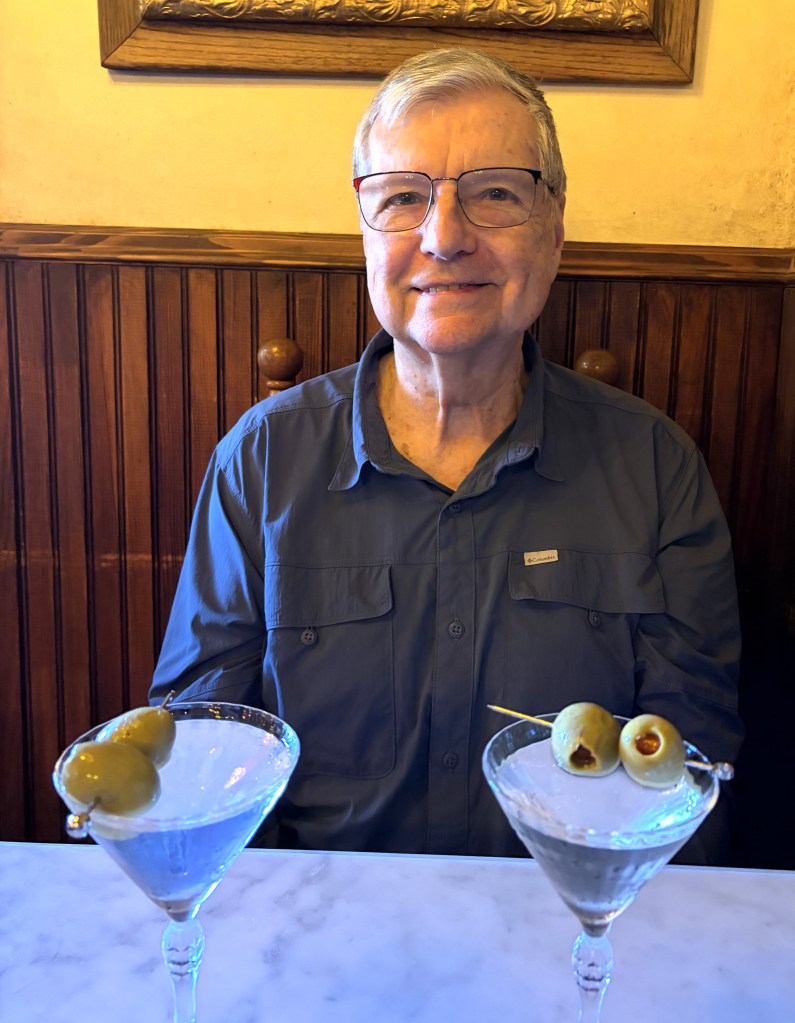
Two months ago, I attended my sixtieth high school class reunion. I’m an alum of Oregon City High School and since I served as Senior Class President, I’ve been involved in organizing these for the last five decades.
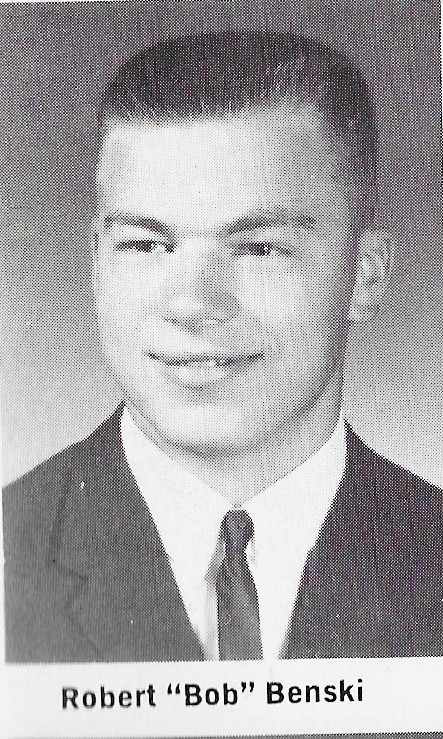
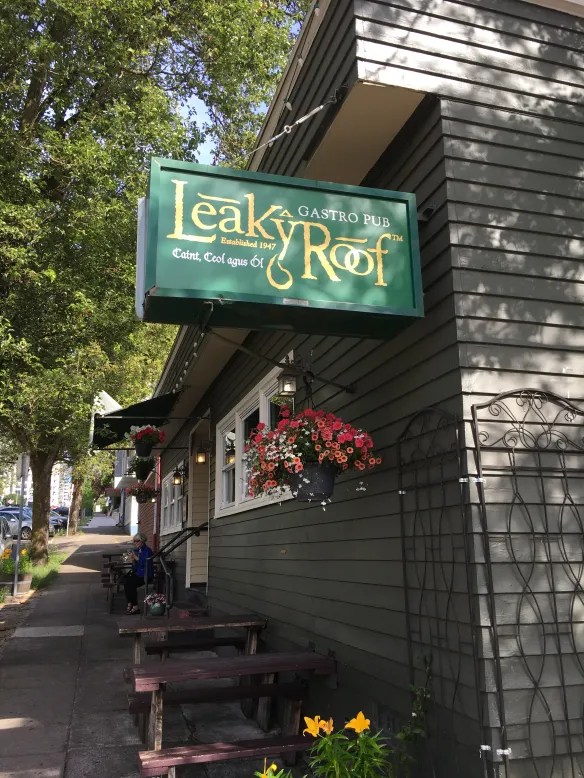
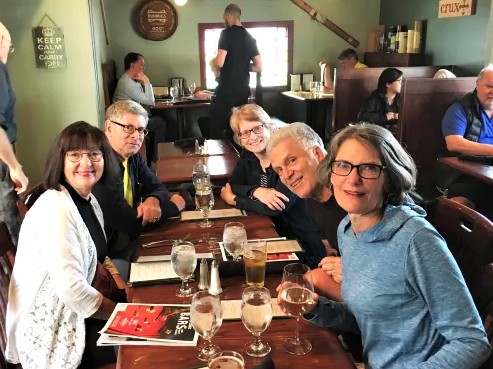
The fiftieth was a rousing success with over 125 classmates and spouses attending with a dinner and formal program. I decided that I was done at that point, but my friend since high school, Dr. Bob Benski – a retired Oregon City Veterinarian – called me last January and persuaded me that we could do a low-key event at a local pub. And the High Rocks Pub in Gladstone did a wonderful job.
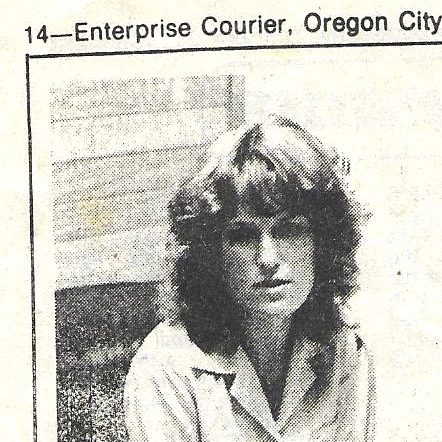
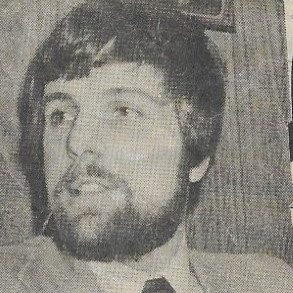
You can see from the pictures below that Bob, adapted with the times, and changed his hair style from high school. The 1975 newspaper photo is from the Rabies Clinic that the OC Jaycees sponsored each year.
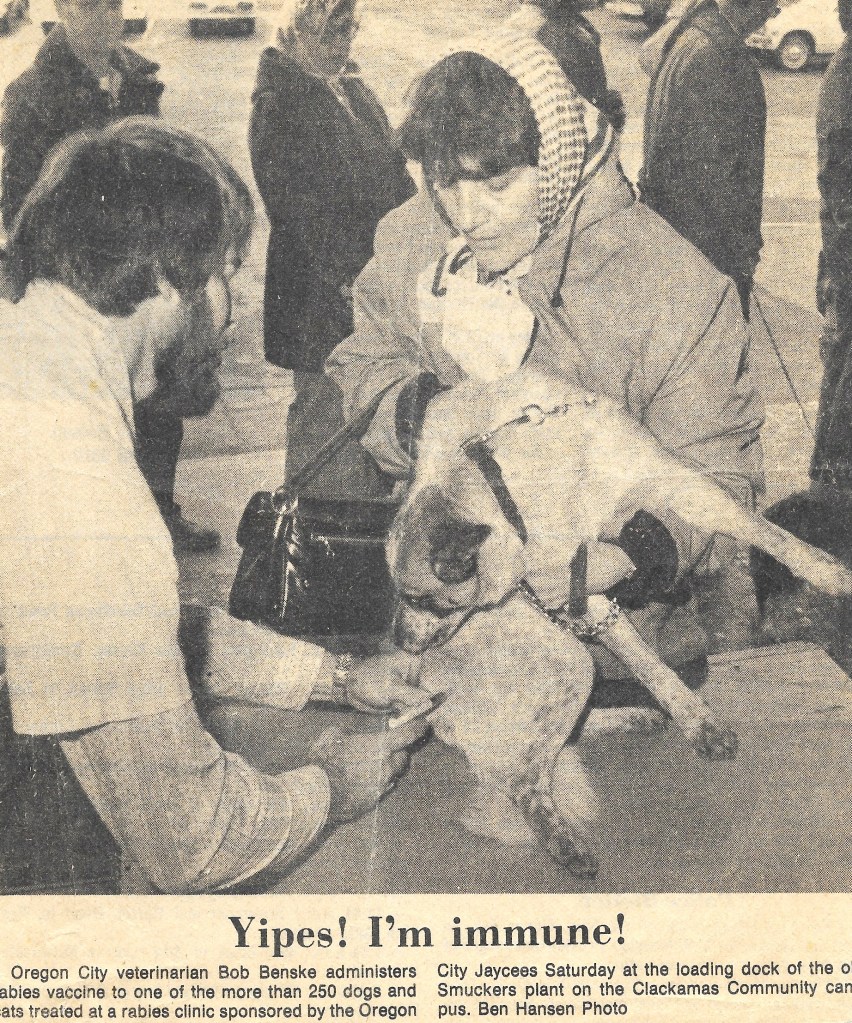
This also gave Bob and me a chance to relive old memories from athletics, Jaycees and careers – his was a lot more interesting than mine. After earning a BS at Oregon State, he received his DVM at Washington State University.
I still miss calling his office every May 8th and telling his receptionist to inform Dr. Benski that his reservation on the 18th green at Pullman Municipal Golf Course was confirmed.
You see, May 8th is celebrated as Outdoor Intercourse Day: “’Outdoor Intercourse Day’ is an unofficial, student‑created holiday on May 8 — a playful, often humorous tradition with roots in the 1960s and a reputation for spreading across the Pacific Northwest – Hurray, Hurray for the 8th of May!”

But I digress, we had a few hundred dollars left from 2016 reunion and aside from the cost of the room rental and some snacks, there would be no expense. Attendees bought their own drinks (or their classmate’s if they had unpaid bets from the past).
Since there was no cost we didn’t ask for RSVPs and had no idea how many would attend on a Saturday night in August – we thought about 20 to 25 from a class of a bit over 300. We were delighted when about 45 showed up and had a wonderful time for about four hours. I give Bob full credit for his prodding to do this and the extensive work he did contacting classmates.
I greeted the assembled classmates shortly after it started and this excerpt reminded us how time passes more quickly than we anticipated at graduation. I kept it short, remembering the admonition from my former colleague at the Schwabe firm, Beerchaser Notable Jack Faust – a man known for his eloquent and witty introductions and presentations. (#5)
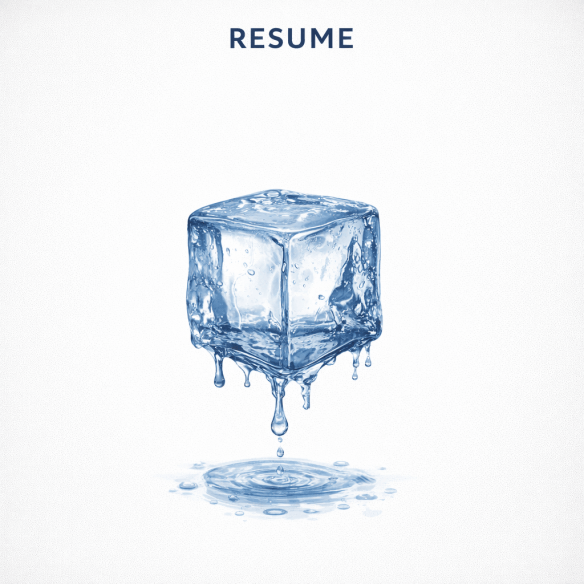
“Don, It should only last as long as you can hold a 20-pound block of ice in your bare hands!”

“The year we graduated from Oregon City, the class having its 60th reunion was the class of 1906. And the graduating seniors this year won’t celebrate their 60th reunion until 2086.
Thanks again for coming and I’m sure you still agree that the class of ’66 is the coolest class to ever walk the halls OR put an outhouse on the roof of Oregon City High School.
And Speaking of Careers…

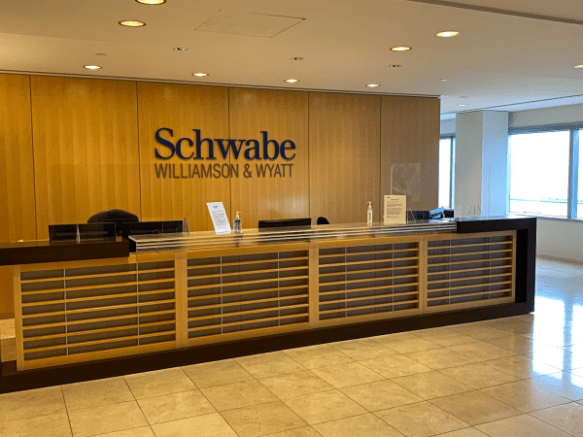
I enjoyed mine immensely and spent my last twenty-five at the Schwabe firm in Portland – a great organization and quality regional firm. I retired in 2011 and have really enjoyed retirement.
So I get amused when I still get messages on Linked-in such as the two below. I realize they are mass generated but think there should still be a bit more content control. I get this one from a Jada every couple months, even though I inform her I’m retired.
” Hey Donald – As Retired (emphasis supplied) Chief Operating Officer, having to manage Schwabe Williamson & Wyatt’s expenses, bills, and travel across multiple systems and spreadsheets must be a hassle. I’d love to send you a free $150 Lululemon or Nike gift card as a thank you for learning more about Rippling Spend.“
I get similar entreaties from a Veda and I’m puzzled why her product would fit a law firm in a high-rise office building:
“….As the Retired (emphasis supplied) Chief Operating Officer do you manage ADT, Bay Alarm, Sonitrol, or a similar alarm vendor at Schwabe Williamson & Wyatt?….I’d love to get you a $200 Amazon Gift Card if you’re open to taking a short demo. Open for 15 mins this week or next? Speak soon!“
Regardless, I’m wondering about the ethics of accepting this benevolence. Maybe the rules have changed, but a long time ago, we even had some debates about whether one should turn over air-miles accrued while on firm business on firm paid airfare. (Fortunately, the hardliners didn’t win on this time since people were usual flying after hours and weekends.)
This Sign was Probably a Lawyer’s Idea
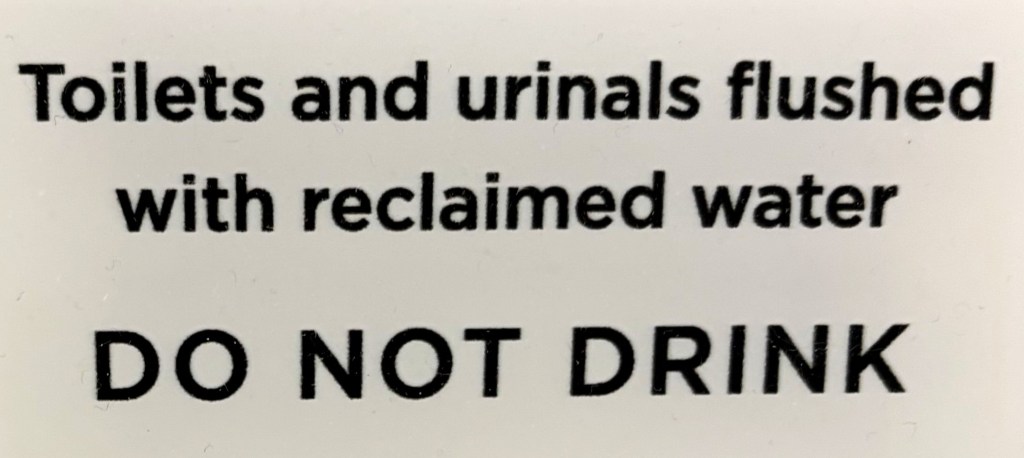
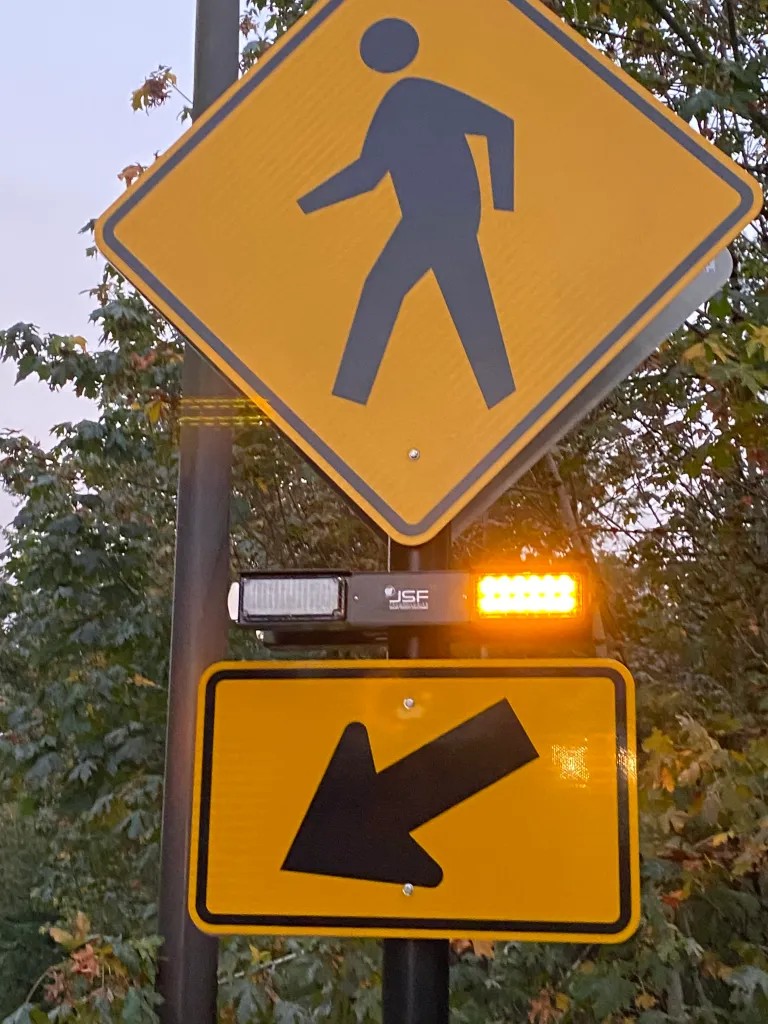
I was recently on the upper floor of a large medical facility – a unit where support animals were not permitted – and came across this sign.
Fortunately, if some misguided soul chose to ignore the sign, there would be medical professionals nearby to flush his or her system. (Perhaps with a co-pay, but no preauthorization.)
Abuse of the English Language and Common Sense
In a recent post, I highlighted lawyer and professor Kevin Frazier, as a Beerchaser Notable. My brilliant friend is Director of the AI Innovation & Law Fellow at the University of Texas School of Law. He writes a subscription based commentary on Substack entitled “Appleseed.” (#6)
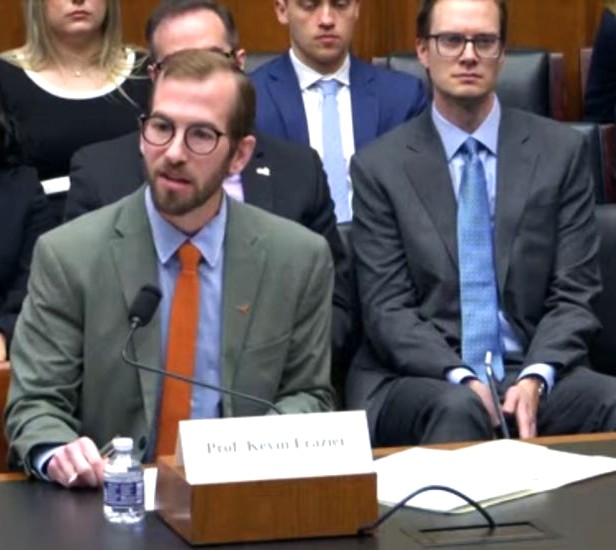
The focus of his narrative is usually AI – policy issues: “Learn how we can accelerate and share advances in AI, turning today’s breakthroughs into tomorrow’s common tools.”
Recently he wrote an insightful narrative entitled: “Why We Opted Not to Work at the AI Labs.”
It addresses the problem: “As AI labs draw professors and students away from universities, society risks losing the expertise to govern what those labs build.” It was very informative, but I left a comment and inquired, “What is the remedy, Kevin?”
Almost immediately, a 250-word response appeared from a guy who writes for Latent Dynamics – “Your guide to building AGI and ASI. Source-tiered, verified deep dives on the engineering path: learning, reasoning, robotics, efficient hardware, quantum-AI and safe autonomy. What works, what fails, what to build next.”
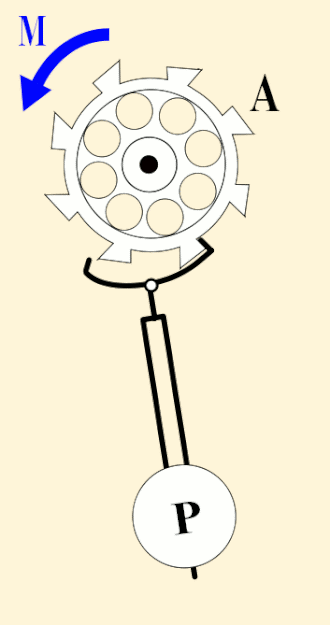
Initially, I thought it was a facetious reply because the prose was so convoluted it made about as much sense to me as the image below. But here you go: (#7)

“Don, we don’t fix this by writing larger checks to academic departments or begging corporate boards for trusted API tokens. That’s a passive waiting game. The solution is architectural, and it doesn’t require us to reproduce their multi-million-dollar training runs.
We must decouple the probabilistic reasoning plane from the deterministic execution plane entirely. If you can’t trust the model’s internal representations, you intercept its dispatches at the operating system runtime boundary.
We do this by compiling declarative safety rules into monotonic Horn clauses. These are evaluated in microseconds by an incremental Datalog safety kernel running inside a hardware-isolated enclave on the local host. When an agent attempts a state mutation, the request is staged in a shadow transaction ledger. The enclave checks the transitive closure of capability grants before a single POSIX-level commit occurs.
If the proposed mutation violates the safety invariant, the transaction is aborted and the local copy-on-write workspace is instantly rolled back. This means we treat the frontier model strictly as an untrusted proposer. We don’t care how many parameters it has or what language it speaks. It has zero transaction authority.
But here is the real catch: once you compile these policies into hard, non-invertible state enclaves, you realize the commercial value-loop and the security-gate share the exact same microarchitectural state lattice. If you can enforce one, you own the other. What happens to the AI labs’ business model when the gatekeeper is a 100-kilobyte Datalog kernel compiled onto a custom RISC-V core at the edge? (✧≖_≖)ノ” (#8)

The above violates my safety invariant?!
That made no sense to Thebeerchaser so I ran it though two runs on AI. The following is the translation of the convoluted scramble of words and sentences above. It’s 90 words shorter.
The problem with AI trust can’t be fixed just by giving more money or special access. Instead, we need a new design that separates the AI’s guessing part from the part that actually makes changes.
Since we can’t fully trust what the AI thinks inside, we put strict safety rules in a small, fast, and secure system on the local computer. When the AI tries to do something, this system checks the action before letting it happen. If it breaks the rules, the change is stopped and undone immediately.
This means the AI only suggests actions but can’t make changes on its own. The same small secure system that keeps things safe can also control who gets to make money from the AI. This new design running on special hardware could change how AI companies work and take away their usual control.
It still doesn’t answer my original question, but some time I’ll ask Kevin. (#9)

External Photo Attribution
# 1- #2. Wikimedia Commons (File:Autumn leaves, Talcott Mountain State Park.jpg – Wikimedia Commons). Licensed under the Creative Commons Attribution-Share Alike 3.0 Unported, 2.5 Generic, 2.0 Generic and 1.0 Generic license. Author: Ragesoss – 21 October 2007.
#3 – #4. Public Domain – Wikimedia Commons (File:Perry-Mason-Look-1961.jpg – Wikimedia Commons) This work has been released into the public domain by its copyright holder, Cowles Communications, Inc.. This applies worldwide. Author: Cowles Communications, Inc.; photograph by Robert Vose – 10 October 1961.
#4 – #5 AI Generated
#6. Linked-in University of Texas School of Law (The University of Texas School of Law: Home | LinkedIn).
#7 – #8 AI Generated
#9. Image courtesy of Pam Williams.











































































.jpg)


.jpg)


