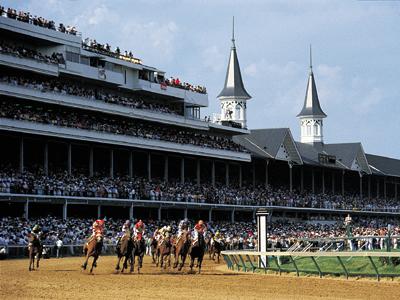
Welcome back to Thebeerchaser. This is a long post. If you are seeing this post through an e-mail, please visit the blog by clicking on the title at the top to see all of the photos and so the narrative is not clipped or shortened. (External photo attribution at the end of the post. #1 – #2)
May is a great month for Thebeerchaser although my birthday reminded me not only of how long I have been pursuing this hobby (since 2011) but more importantly, how many times the earth has rotated on its axis with me on it (in contrast to making trips around the sun) – that would be 28,490. (You can calculate how old that makes me and don’t forget leap years…)
In terms of hours that would be 683,760 on my birthday, although I think the time in sophomore geometry at Oregon City High School should add an additional increment for each period.
What’s in a Name?
My retired journalist friend, Kirby Neuman Rhea, who you may have read about in my post in June 2025 is an original and creative thinker.
In a conversation we had when Beerchasing in McMinnville a few years ago with my fraternity brother, Craig (The Dude) Hanneman, I mentioned as we were raising a mug, that breweries were running out of names for new beers.
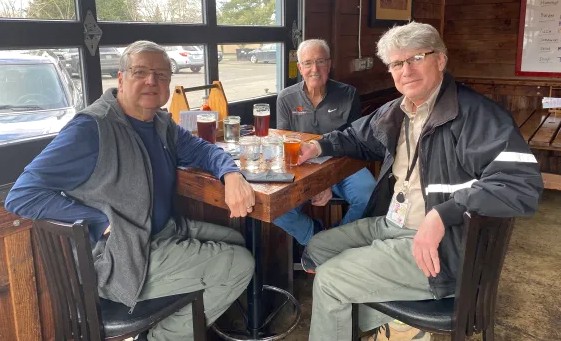
The Dude in the center and Kirby on the right.
I’d read an article and then saw a newsletter from an Intellectual Property law firm entitled, “Craft Beer Names Worth Protecting” which said, in part:
“A recent search of the records of the US Trademark Office revealed over 63,000 active registrations and published applications for beer names alone.
This number is up from the 22,000 we found in 2015. Registration of your brewery and beer names is vital to protecting your brand and to prevent others from using the same or similar names in a way that may confuse your customers.“
Kirby, in a moment of inspiration, then suggested that brewers should use the names of racehorses for their new brews. Although we’d each only had one brewski, we unanimously affirmed the creativity and brilliance of that idea.
I decided to test that hypothesis using a number of the entrants in the 2026 Kentucky Derby and with the on-line help of an expert on beer styles and characteristics. Rich Carbonara. He has an outstanding website and business in Munich, Germany. (#3 – #5)
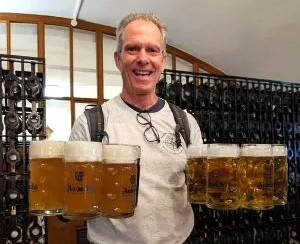
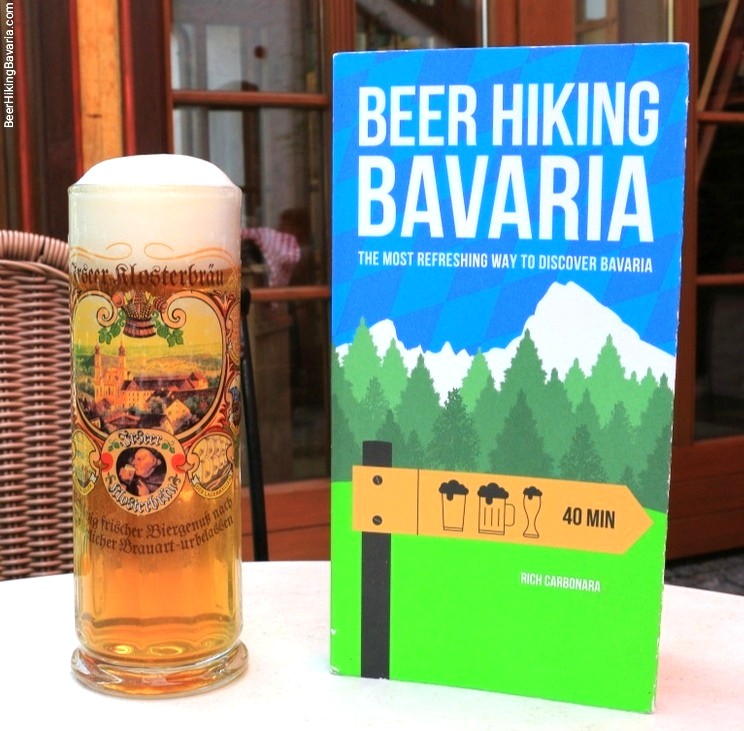
Beerwanderers.com is a site for lovers of new beers in Franconia, largely a region in northern Bavaria where close to 300 breweries are densely dotted across a timeless landscape. Since 1997, Rich has been leading tourists on hikes and visits to the breweries.
He is also the author of an excellent book Beerhiking Bavaria. (Here’s hoping he’ll forgive me for this sacrilege in describing beers!).
See if you think these hypothetical beers with the actual names of seven horses in this year’s Derby would make the tap list in your favorite bar:
“Renegade” IPA – A strong contender out of the gate which maintains flavor throughout the entire race (mug). From wire-to-wire this horse sets a comfortable tempo, though there are consequences if you drink too fast too early.
“Commandment” Helles – This thoroughbred is versatile, possessing enough speed and taste to keep up with the front-runners but able to save energy to take the lead with the final mug
“Right to Party” Bock – A steed which can be considered a “closer” to the last brew. May remain at the rear of the field in the early stages, saving energy for a “closing kick” or strong finish for the final furlong or stein.
“Golden Tempo” Pilsner – (The Winner!) – A champion mount with a commanding head and a golden yellow hue. Comes out of the tap with unbridled enthusiasm and positions in the middle of the pack, staying just off the pace, monitoring the front-runners until it crosses the finish line as the winner. (#6)
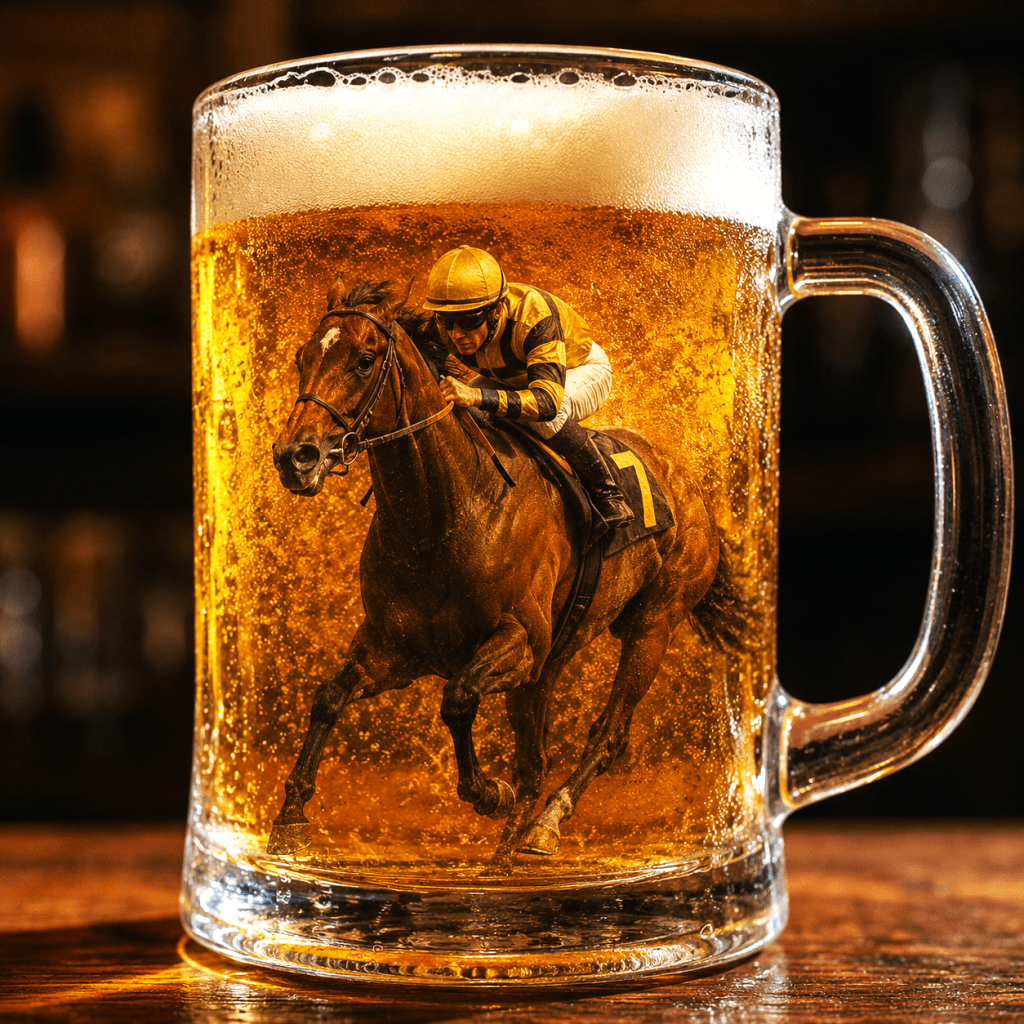
Golden Tempo – Winner of the 2026 Kentucky Derby
“Pavllovian” Porter – After this bangtail fell out of flavor with its stablemates, it has had a bit of a resurgence. Gallops rather than competing with noble hops to a semi-dry, semi-bitter, but impressive finish notwithstanding the handicappers.
“Litmus Test” Lager – An unfiltered chestnut filly with a light roast in the nose. Fairly balanced in a malty way but it’s a little thin on flavor and energy overall. Meanders a bit in finishing but not sticky.
“Great While” Ale – This mare has made strides with its spicey character and interesting complexity. A strong competitor, but doesn’t overpower in the final stretch.
This Book is Definitely Not a Flop!
Oregon State University alums bemoan the demise of the Pac 12 and the current state of athletics in Corvallis. Beaver teams have a rich legacy from the 1967 Oregon State Giant Killer Football Team to three NCAA Titles in Baseball (2006, 2007 and 2018), the 1980-81 Orange Express Basketball Team which went 26 and 0 and had a #1 rating, to the 2001 Fiesta Bowl victory over Notre Dame to name just a few.
Individual OSU athletes have made their mark in both college and professional sports from 1962 Heisman Trophy Winner Terry Baker, to NBA Hall of Famer Gary Payton, to Gold Medal Olympic gymnast Jade Carey, Baltimore Orioles catcher Adley Rutschman and NFL lineman and then mountaineer (Seven Summits) Craig Hanneman.
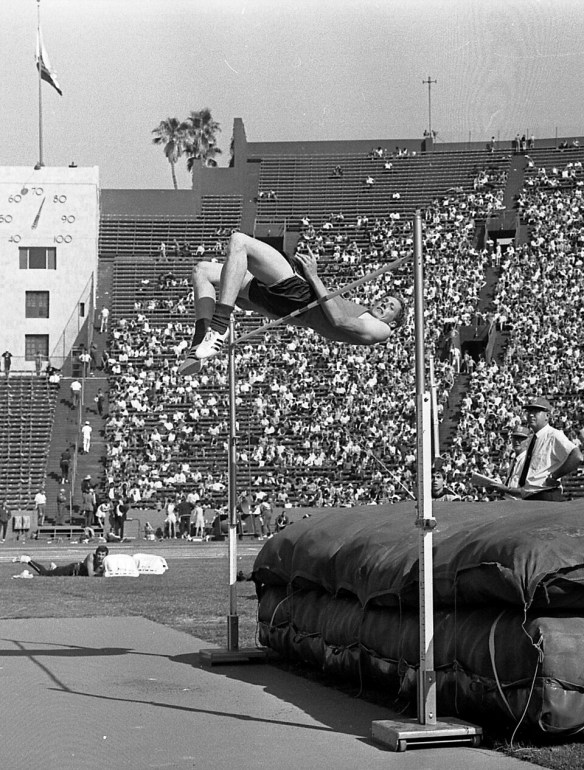
I would suggest, however, that none brought the notoriety and lasting impact on his or her sport than the late Dick Fosbury – the originator of the Fosbury Flop. (#7 – #8)
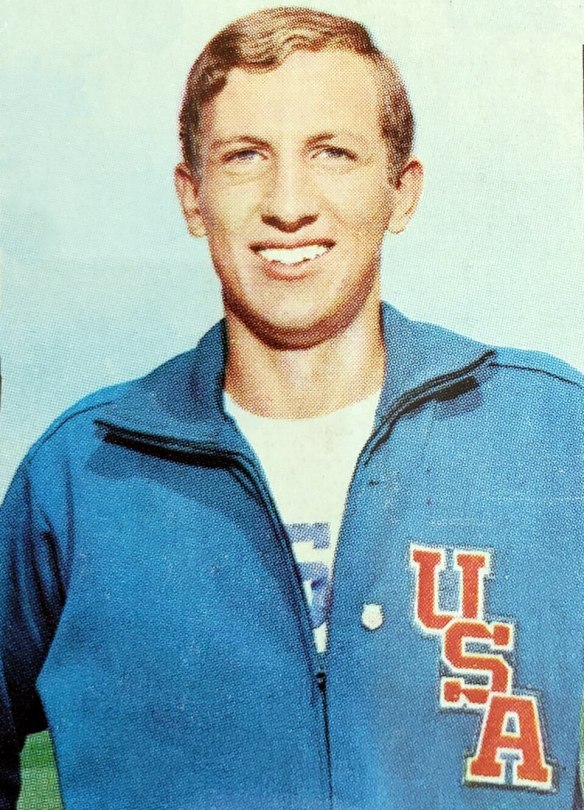

Since I met Foz at OSU in 1967, I knew about his accomplishments, but gained new insight earlier this year when my former Schwabe law firm colleague, Brian (Brain) King gave me the book The Wizard of FOZ – co-authorized by Foz and author, columnist and teacher, Bob Welch.
And what an excellent read! I couldn’t stop, although it may have been more meaningful to me, because I was at OSU during the time the legendary high jumper was and actually met him on the track – and not because I was an athlete….
Dick was one year ahead of me – he started undergrad school in 1965. The book talks about how he struggled mightily with the concurrent demands of track and being an engineering major, although his fraternity activities didn’t help in the equation.
The authors talk about how in 1967, to keep from flunking out (and then being drafted and headed for Viet Nam), Foz was forced to work out on the OSU track (Bell Field) at night to fit the engineering labs and studies in during afternoons. (#9)
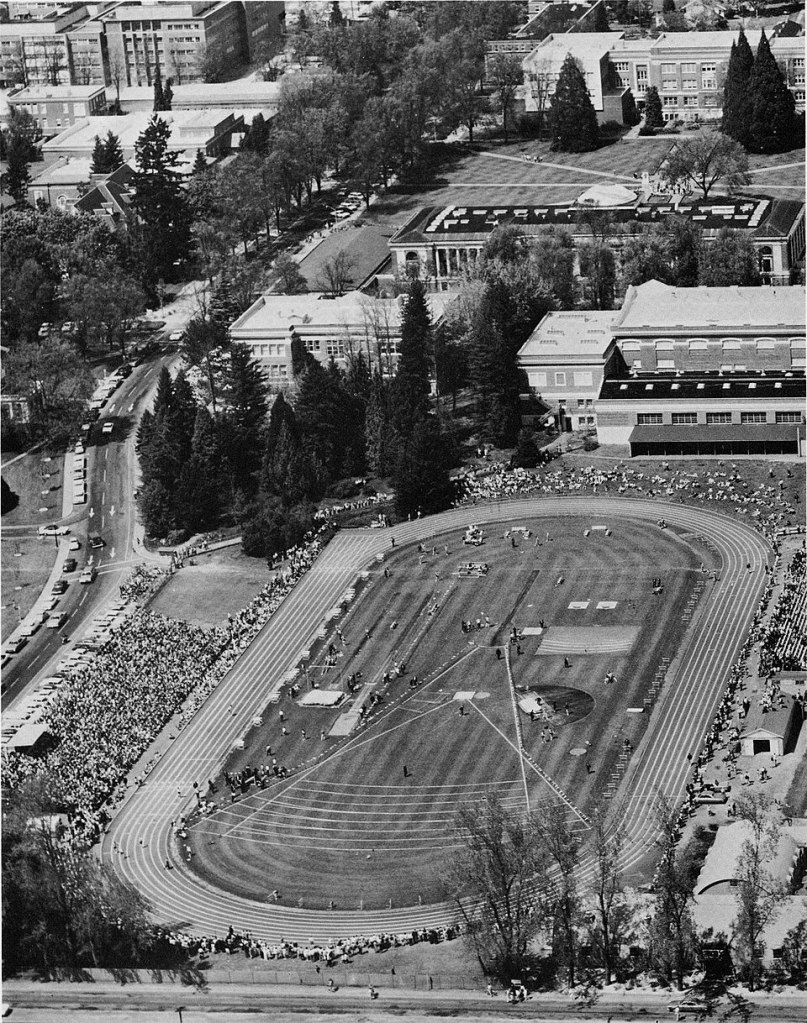
My sophomore year was not a good time in my life. I was struggling with second term calculus and physics required for my NROTC scholarship and longer-term, trying to figure out what a Political Science major was going to do with that degree after my naval service.
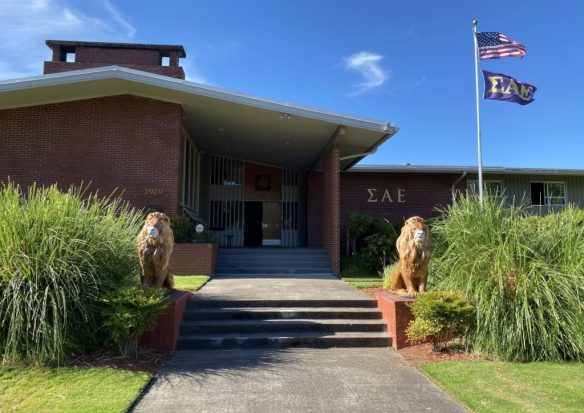
My counselor told me: “Shape up and get some exercise – every day! With classes, my Navy drills and fraternity obligations, the only time I could really do this was at night. Bell Field was less than a mile from the SAE house, so I would jog down and then put in a couple of miles around the track.
Usually, the only other guy there was a high jumper practicing. I marveled at his grace in clearing the bar with his unique style. Dick Fosbury already had some notoriety, but was not an Olympian until 1968. One night, I went up to him and introduced myself and complimented him on his success to this point.
He was extremely humble and friendly and we often had quick chats during our mutual routines. (#10)
The book also captivated me because I knew or know a number of people who are quoted or mentioned multiple time in the story of this Medford, Oregon native. Steve Davis, who was a primary competitor of Foz at Medford High School and lettered in both track and football at OSU, was an SAE fraternity brother:
“At sixteen. Dick had no illusions of athletic grandeur. He knew he was no Steve Davis, a fellow sophomore who had already cleared 6’0″.”
“Steve Davis, Fosbury’s high jump rival at Medford High School became a special agent with the US Secret Service with responsibilities for protecting presidents, Jimmy Carter and Ronald Reagan. He lives in San Diego, California.”
Fred Spiegelberg was the coach of the legendary Medord Black Tornado Football Team for over thirty years starting in 1952. He was a decorated WW II hero and played college football at Washington State in addition to being a nationally ranked intercollege light-heavyweight boxer. In 1979 he was named to the High School Football Coaches Hall of Fame. (#11)
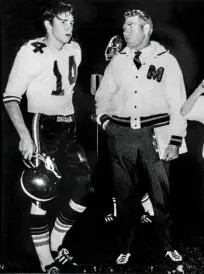
“At forty-three, Spiegelberg had the presence of General Patton and the looks of Charlton Heston. He was tough but fair…Nobody in Medford was more revered than Fred Spiegelberg.
Though autumn was his season in the sun, he played a far less visible, and prestigious role in the Medford High School athletics come spring: assistant track coach…He was the high jump coach.” Page 42 – The Wizard of Foz
Thus, “Spieg” was Dick’s coach and they debated the traditional straddle style verses the flop, which no one else in Oregon – or the country was using.
“…but Spiegelberg thought Fosbury’s method was flat out crazy, akin to kicking a field goal backward with your heel….’he’s never going to be a jumper unless he gives up this god-awful whatever you call it. If we teach him to straddle maybe he can score for us at district.'” Page 52
He had the same friction with Berny Wagner during his years at Oregon State although both coaches ultimately acquiesced when they saw his determination and ultimate success with his “invention.” And Fosbury respected both men which made it more difficult for him to persevere.
Scott Spiegelberg, like his dad, Fred, and Dick Fosbury, is a member of the Medford High School Athletic Hall of Fame. He played quarterback for Medford and earned All-State and even All-American honors for his accomplishments on the high school gridiron. (#12 – #13)
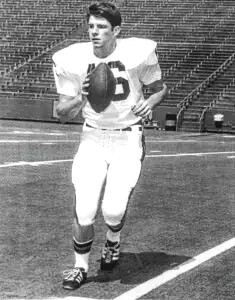
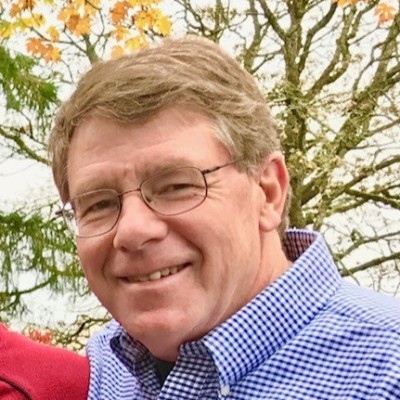
Upon graduation, he went to OSU and played two years for Coach Dee Andros becoming the Beavers’ starting quarterback in his sophomore year.
His memory of Dick Fosbury’s ill-fated high school football career in a practice involving future NFL star, Bill Enyart, when Scott was a sophomore and Foz was a senior at Medford is quoted in the book:
“The quarterback faked a handoff to (Bill ‘Earthquake’) Enyart meaning Wild Bill would be blocking. He rumbled in Dick’s (playing defensive end) direction like a runaway boulder down Mt. Ashland.
‘Broke his helmet in four places,’ remembered Scott Spiegelberg. Three of Dick’s teeth were chipped’…Fosbury never played another down of football.” Page 45
Scott has had a wonderful professional career in both the private sector and primarily in various positions for Oregon State University both in the Business School and the Athletic Department. He pledged SAE in 1971, after I had graduated; however, I’ve gotten to know him through alumni functions.
He has remained active in fraternity and civic affairs ever since graduation including assisting students at Corvallis High School and serving as President of the SAE Housing Corporation for over fifteen years. He believes in giving back to the community.
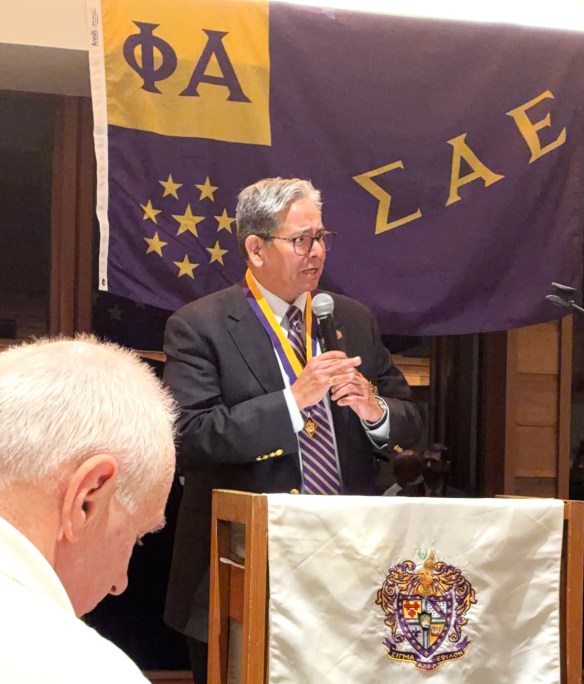
I told him at the SAE Founders’ Day Dinner celebrating the fraternity’s 170th anniversary in March, that I enjoyed reading about his dad and his interactions with Dick Fosbury in the book. (I also told him that unlike his dad, he didn’t resemble Charlton Heston.)
It was a great dinner and there was a national officer who flew to Portland to address the assembled group of 88 ranging back to the sixties and fourteen brothers from the class of ’76 receiving their fifty-year certificates.
Unfortunately, Dick Fosbury passed away from lymphoma in 2023, after first being diagnosed in 2008. Although the book talks about how challenging the goal was for him, he graduated from OSU in 1972 with his civil engineering degree. He moved to Ketchum, Idaho in 1977 and became co-owner of Galena Engineering.
He was elected to public office and received numerous awards and honors, both for his athletic and humanitarian activities. He leaves a great legacy, and his name will always be associated with the predominant high jumping style used throughout the globe.
Cheers!
External Photo Attribution
#1. Wikimedia Commons (File:Kentucky Derby race, Louisville, Kentucky.jpg – Wikimedia Commons) Source: Transferred from en.wikipedia to Commons by Milk’s Favorite Cookie. Author: The original uploader was Sayeth at English Wikipedia. 31 March 2005.
#2. Image courtesy of Pam Williams
#3. Chat Gpt (https://chatgpt.com/c/69febe61-efc4-83ea-8e99-c2b85b50ce7c).
#4 – #6. Beerwanderers (Franconian Beer Breweries Trails).
#7. Public Domain – Wikimedia Commons (File:Dick Fosbury 1968.jpg – Wikimedia Commons) This work is in the public domain in the United States. Author: Unknown – 1968.
#8. Wikimedia Commons (File:FosburyFlop.jpg – Wikimedia Commons) Licensed under the Creative Commons Attribution-Share Alike 4.0 International license. Author:
Respublika Narodnaya – 31 August 2017.
#9. Wikimedia Commons (File:Bell Field (6443605231).jpg – Wikimedia Commons) This image, originally posted to Flickr, was reviewed on 5 September 2013 by the administrator or reviewer File Upload Bot (Magnus Manske), who confirmed that it was available on Flickr under the stated license on that date. Author: OSU Special Collections & Archives : Commons – 27 April 2005.
#10. Wikimedia Commons (Dick Fosbury at the 1968 Olympic trials – Category:Dick Fosbury – Wikimedia Commons) Licensed under the Creative Commons Attribution 4.0 International license. Source: https://digital.library.ucla.edu/catalog/ark:/21198/zz0002vq8n Author: The Los Angeles Times – 1 July 1968.
#11. Medford Athletic Hall of Fame (Fred “Spieg” Spiegelberg: 1985 Medford Sports Hall of Fame Inductee).
#12. Medford Athletic Hall of Fame (Scott Fredric Spiegelberg: 1990 Medford Sports Hall of Fame Inductee).
#13. Linked-in (https://www.linkedin.com/in/scott-spiegelberg-a565b234/)
#14. Oregon Alpha Chapter of SAE Newsletter (https://saeoregonstate.com/).


.jpg)
